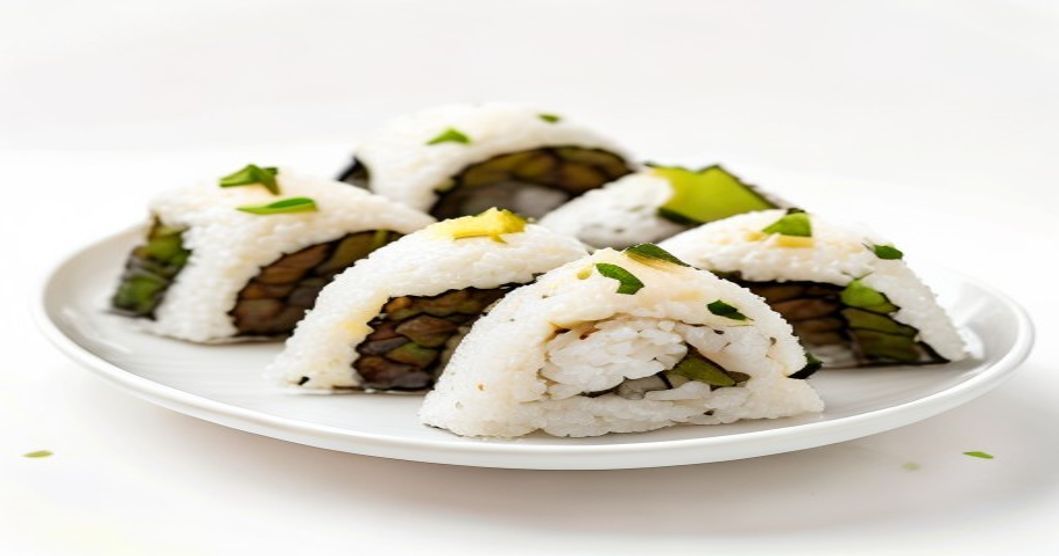
There is a food available at every convenience store in Japan, open 24 hours, costing under 200 yen, that delivers a precise combination of fast-digesting carbohydrates, moderate protein, sodium, and B vitamins in a package small enough to fit in a gym bag pocket. It requires no refrigeration for several hours, no utensils, and takes 30 seconds to eat.
That food is onigiri. And it is probably the most underrated training fuel in the world.
The Structure of an Onigiri
Onigiri is a compressed ball or triangle of white rice, usually around 100-120g of cooked rice, containing a filling in the center, wrapped in nori (dried seaweed). The outside is lightly salted. That is the complete architecture.
What makes this structure useful for athletes: the rice provides fast-digesting carbohydrates for glycogen replenishment, the filling adds protein and flavor, the salt replaces sodium lost in sweat, and the nori adds micronutrients at almost zero caloric cost. Every component earns its place.
Nutritional Data by Filling
| Filling | Calories | Protein | Carbs | Notes |
| Sake (salmon) | ~180 kcal | ~6g | ~32g | Omega-3s, clean protein. Best all-around choice. |
| Tuna mayo (tuna mayonnaise) | ~210 kcal | ~7g | ~31g | Higher fat from mayo. More calories, good flavor. |
| Kombu (kelp) | ~160 kcal | ~3g | ~34g | Highest iodine content. Very low calorie. |
| Ume (pickled plum) | ~155 kcal | ~3g | ~34g | Citric acid aids recovery. Traditional athlete choice. |
| Karaage (fried chicken) | ~240 kcal | ~9g | ~31g | Highest protein option. More fat from frying. |
| Mentaiko (spicy cod roe) | ~185 kcal | ~7g | ~32g | High sodium. Good post-workout electrolyte hit. |
| Takana (pickled mustard leaf) | ~165 kcal | ~3g | ~35g | Probiotic from fermentation. Gut support. |
Pre-Workout vs. Post-Workout
Onigiri works at both ends of a training session, but the optimal choice differs:
Pre-workout (60-90 minutes before): White rice has a GI of around 73 — high enough to provide fast fuel, slow enough not to cause a crash mid-session when eaten with protein. Choose salmon or tuna mayo for the protein content. Eat one onigiri for a lighter session, two for a longer or heavier one.
Post-workout (within 30-45 minutes): This is where onigiri shines. The high-GI white rice rapidly restores muscle glycogen in the post-exercise window when glucose transporters are maximally active. The sodium from the salt and filling replaces sweat losses. Two onigiri plus a protein source (additional tuna, a boiled egg from the konbini) hits the post-workout nutrition window cleanly for under 500 yen total.
The Nori Factor
The thin sheet of dried seaweed wrapped around an onigiri looks like packaging. It is not. Nori is one of the most micronutrient-dense foods available in Japan:
- Vitamin B12: One of the few plant-based sources of B12, important for red blood cell production and nerve function. Relevant for athletes eating limited animal protein.
- Iodine: Essential for thyroid function, which regulates metabolism and energy production. Iodine deficiency suppresses training adaptation.
- Iron: Nori contains meaningful iron per gram — important for oxygen transport and endurance performance.
- Vitamin C: Enhances iron absorption from the rice and filling in the same meal.
The nori on a single onigiri contributes meaningfully to daily micronutrient intake in a way most people do not account for.
Lower-GI Options
Most convenience stores now stock onigiri made with jurokukokumai (sixteen-grain rice) or genmai (brown rice). These use mixed grain or unmilled rice with a significantly lower GI than white rice — better for sustained energy during longer sessions or for athletes who are insulin-sensitive.
They are slightly more expensive (around 20-30 yen more per piece) and have a chewier texture, but deliver the same portable convenience with slower-releasing carbohydrates. For pre-workout use especially, these are worth choosing over standard white rice variants.
The Home Batch Strategy
Buying onigiri at a convenience store every day costs 120-180 yen per piece. Making them at home and freezing them costs approximately 20-30 yen per piece — a cost reduction of 80-85% with minimal effort.
The protocol:
- Cook a large batch of rice (3-4 cups dry)
- While rice is still warm, shape into triangles using a rice mold (onigiri mold, around 100 yen at any 100-yen store) or wet hands
- Add filling of choice to the center before sealing
- Wrap individually in plastic wrap while warm
- Freeze immediately — onigiri freeze and reheat extremely well
- Microwave from frozen for 2 minutes before training
A batch of 10 onigiri takes about 20 minutes total and provides a week of pre or post-workout snacks for around 250-300 yen total. Add nori just before eating to keep it crisp.
The Convenience Store Guide
All three major convenience store chains stock onigiri, but there are differences worth knowing:
- Seven-Eleven: Generally considered the highest quality. Rice texture is consistently good. Largest variety including premium and regional fillings.
- FamilyMart: Strong lineup, competitive pricing. Often has the best value multi-buy promotions on onigiri.
- Lawson: Good standard selection. Lawson is particularly strong for health-oriented variants including grain rice and lower-calorie options.
All three chains have their onigiri section near the entrance and restock multiple times daily. Early morning (before 8am) and early afternoon (around 2-3pm) are when the freshest stock typically arrives.
The Bottom Line
Onigiri is not a compromise snack. It is a purpose-built carbohydrate-protein-electrolyte delivery system wrapped in a micronutrient-dense seaweed shell, available at any hour of the day or night across every city in Japan, for the price of a vending machine drink.
Professional cyclists carry rice cakes as race fuel. Japanese athletes have been carrying onigiri to practice for generations. The logic is identical.
Buy two on the way to your next workout. Eat one before, one after. That is the entire strategy.

コメント