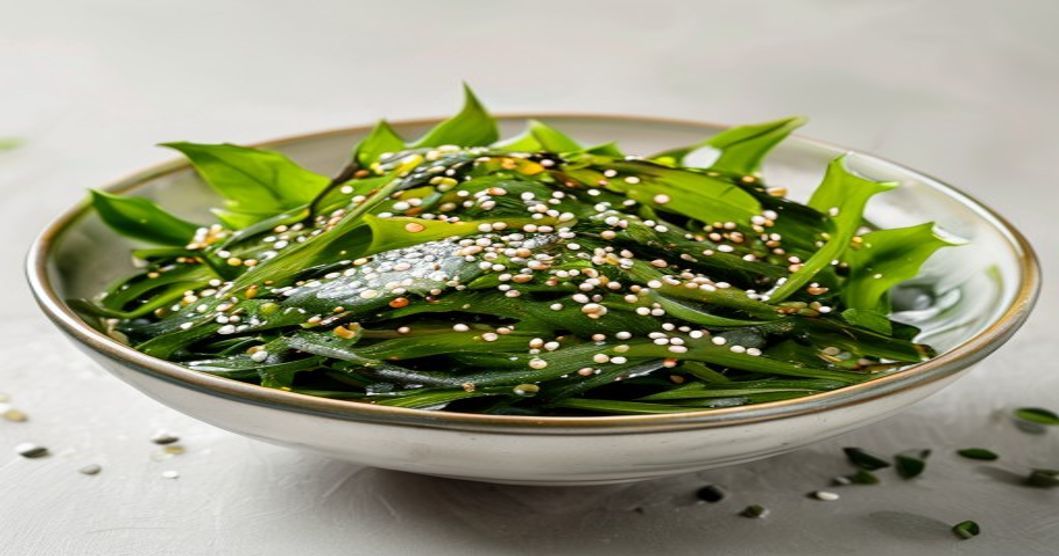
It floats in your miso soup, fills out your seaweed salad, and wraps your sushi — yet most people barely think about it. Wakame and other Japanese seaweeds (海藻) are among the most nutrient-dense, low-calorie foods on the planet, and they fill nutritional gaps that even careful athletes often miss. Here is why this overlooked sea vegetable deserves your attention.
What Are We Talking About?
Japan eats a remarkable variety of seaweed: wakame (the soft green seaweed in miso soup and salads), nori (the sheets around sushi and onigiri), kombu (thick kelp used for dashi stock), and hijiki (small black strands). All are sea vegetables packed with minerals from the ocean.
1. A Rare Source of Iodine
Seaweed is one of the best natural sources of iodine, a mineral essential for healthy thyroid function. The thyroid regulates metabolism and energy, so adequate iodine matters for anyone training hard. Few everyday foods provide it — seaweed does so abundantly. (A note: because it is so rich, you only need modest amounts; more on that below.)
2. Packed with Minerals
Seaweed delivers calcium, magnesium, iron, and potassium — minerals critical for muscle contraction, bone health, oxygen transport, and electrolyte balance. Magnesium in particular supports muscle relaxation and recovery, while iron helps carry oxygen to working muscles. It is like a natural multimineral from the sea.
3. Nutrients with Almost No Calories
Wakame and its cousins are extremely low in calories while being rich in fiber and micronutrients. For athletes managing weight or body composition, seaweed adds volume, flavor, and a dense nutrient hit to meals without meaningful calories — the definition of nutrient-dense eating.
4. Fiber for Gut Health
Seaweed contains unique soluble fibers that support digestion and feed beneficial gut bacteria. A healthy gut improves nutrient absorption and immune function — both of which keep athletes training consistently instead of sidelined by illness.
Easy Ways to Eat More Seaweed
- Miso soup: Toss a small handful of dried wakame into your soup — it rehydrates in seconds.
- Seaweed salad: Rehydrate wakame and dress with rice vinegar, sesame oil, and sesame seeds.
- Nori snacks: Roasted nori sheets are a zero-guilt, mineral-rich snack.
- Rice topping: Sprinkle furikake (often seaweed-based) over rice for instant minerals.
A Word of Caution on Iodine
Because seaweed is so iodine-rich, eating very large amounts every day can supply far more iodine than your body needs. Kombu is especially high. Enjoy seaweed regularly in normal food-sized portions — a daily bowl of wakame miso soup is perfectly fine — but you don’t need to eat it in bulk.
The Takeaway
Seaweed is the ultimate easy upgrade: nearly calorie-free, loaded with iodine, minerals, and gut-friendly fiber, and effortless to add to soups, salads, and rice. The next time you eat miso soup, appreciate that floating wakame — it is doing more for your body than you ever realized.


コメント