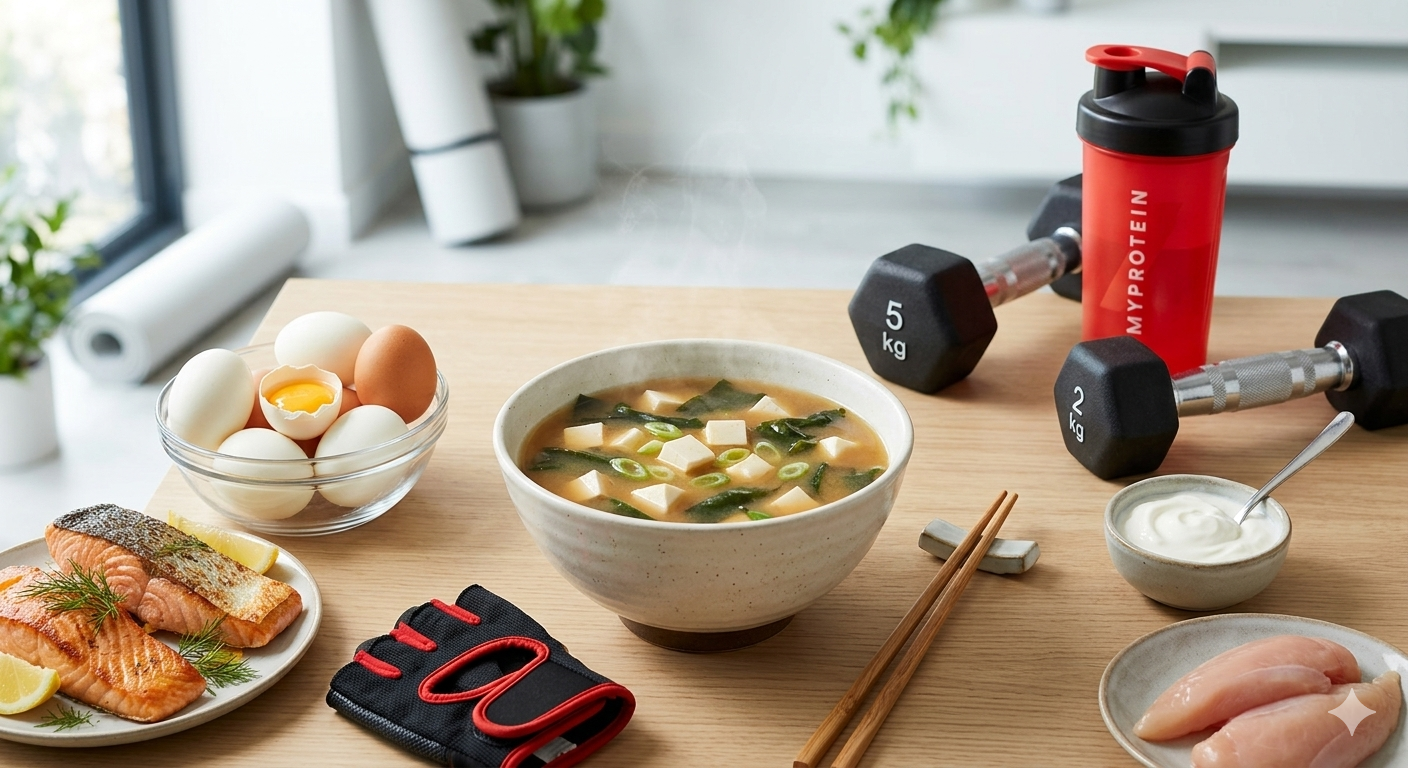
A quiet bowl of miso soup before the day begins looks almost too simple to matter. But that bowl is one of the most nutritionally dense fermented foods on the planet — and Japanese people have been loading up on it for over a thousand years.
What Is Miso?
Miso is a fermented paste made from soybeans, salt, and koji mold. Fermentation breaks down proteins into free amino acids and creates beneficial microorganisms. White miso is mild and sweet; red miso is aged longer and higher in protein. Most Japanese households keep it on hand at all times — as fundamental as olive oil is to Mediterranean cooking.
Why Athletes Should Pay Attention
A tablespoon of miso delivers around 2g of protein in pre-digested form — free amino acids that absorb faster than most unfermented sources. It contains all nine essential amino acids, including leucine (the key trigger for muscle protein synthesis) and glutamine (critical for gut integrity under training stress). Add manganese, zinc, copper, B vitamins, and live Lactobacillus probiotics, and you have a food that earns its place in any athlete’s diet.
Recovery and Inflammation
Miso’s isoflavones — genistein and daidzein — have documented anti-inflammatory properties, helping shorten the window between hard sessions. Its sodium content replaces electrolytes lost through sweat, supporting muscle contraction and preventing cramps. Research in the Journal of Nutritional Science and Vitaminology found that regular miso consumption improved recovery markers in athletes versus controls.
How Japanese Athletes Use It
In Japan, miso soup is a cornerstone of breakfast — before any physical demand hits, the body has already received probiotics, electrolytes, and bioavailable amino acids. Sumo wrestlers build mass on miso-based chanko nabe. Okinawa, a Blue Zone, shows consistently low rates of sarcopenia, with fermented soy as a dietary staple. This is population-level evidence, not anecdote.
How to Start
- Post-workout soup: Dissolve 1-2 tbsp miso in hot (not boiling) water with tofu, wakame, and green onion. Five-minute recovery drink.
- Miso marinade: Mix with mirin, sesame oil, and garlic. Use on chicken, salmon, or beef.
- Morning habit: Start your day with miso soup and prime your gut before training.
Always buy unpasteurized miso (refrigerated section) to keep live cultures active. Look for brands like Hikari or Marukome.
The Takeaway
Japan did not accidentally produce one of the world’s longest-lived, leanest populations. Miso — fermented, alive, amino acid-dense, anti-inflammatory — does exactly what the body needs. Give it 30 days. The Japanese have been running this experiment for a thousand years. The results are in.


コメント