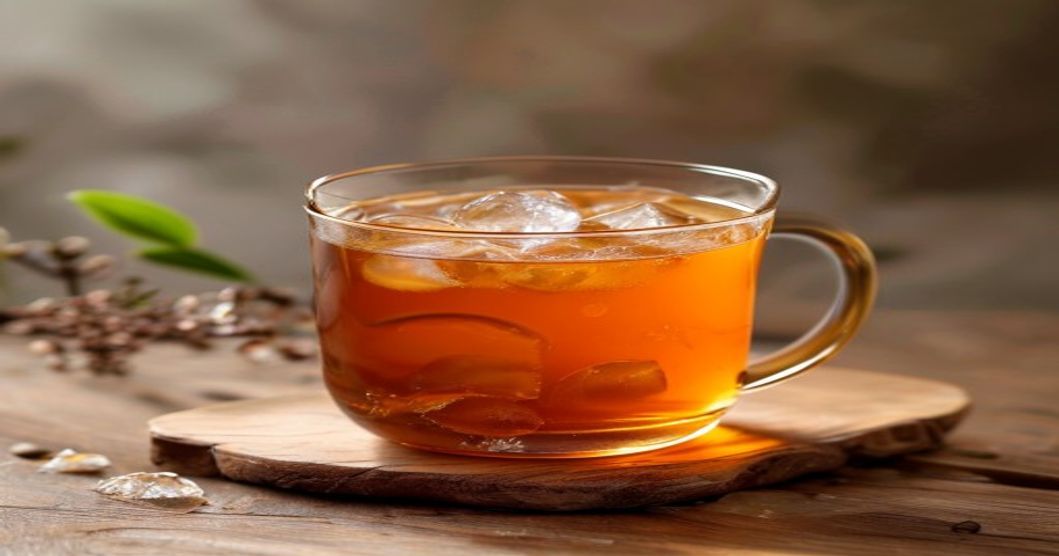
Every summer in Japan, school sports clubs fill giant thermoses with a dark, roasted liquid that smells faintly of grain and has no caffeine, no sugar, no calories, and costs almost nothing to make. High school baseball players drink liters of it during practice. Marathon runners carry it to races. Japanese grandmothers have a jug in the refrigerator from May to September.
This is mugicha — roasted barley tea — and it is quietly one of the most practical hydration tools available to athletes in Japan.
What Mugicha Is
Mugicha is made by steeping roasted barley in hot water, then cooling and refrigerating. That is the entire process. The result is a dark amber liquid with a toasty, slightly bitter flavor — similar to roasted grain coffee but without the caffeine or acidity.
It contains no tea leaves, no caffeine, and no calories in its pure form. It is consumed cold in summer and hot in winter, and it is one of the most widely consumed beverages in Japan across all age groups.
The Nutritional Profile
| Mugicha (500ml) | Sports Drink (500ml) | Green Tea (500ml) | |
| Calories | 0 kcal | ~130 kcal | ~5 kcal |
| Sugar | 0g | ~30g | 0g |
| Caffeine | 0mg | 0mg | ~75mg |
| Potassium | ~50mg | ~100mg | ~25mg |
| Magnesium | ~10mg | ~5mg | ~5mg |
| Cost (homemade) | ~5 yen | ~150 yen | ~10 yen |
Mugicha does not replace electrolyte drinks in situations of heavy sweat loss — it lacks sufficient sodium for that. But for everyday training hydration, light sessions, and post-workout rehydration where a sports drink’s 30g of sugar is unnecessary, mugicha is the smarter option.
The Body Temperature Science
Here is the part that makes mugicha genuinely interesting from a sports science perspective: it contains compounds called alkylpyrazines, produced during the barley roasting process, that have been shown to improve microcirculation — blood flow through the smallest capillaries near the skin surface.
Better microcirculation means your body can dissipate heat more effectively. When you are exercising in Japan’s summer heat and humidity, the ability to cool efficiently is not a comfort issue — it is a performance and safety issue. Core temperature elevation is one of the primary limiters of endurance performance in hot conditions.
A study published in a Japanese clinical journal found that mugicha consumption improved blood fluidity and microvascular blood flow compared to water alone. This is why it became the traditional summer sports drink in Japan long before anyone had a name for the mechanism. The effect was empirically observed first, explained by science later.
The Caffeine-Free Advantage
Most popular beverages in Japan — green tea, black tea, coffee, many sports drinks — contain caffeine. For training hydration, this creates a problem: caffeine is a mild diuretic, which counteracts the hydration you are trying to achieve. It also raises heart rate and cortisol, which is not always desirable during training or recovery.
Mugicha has zero caffeine. This makes it uniquely suited for:
- Evening training sessions: Hydrate without disrupting sleep onset or sleep quality
- Long training sessions: Drink freely without the accumulating diuretic effect of caffeinated alternatives
- Post-workout recovery: Rehydrate without stimulant interference with the parasympathetic recovery state
- Rest days: Maintain fluid intake without additional caffeine load on a day when you do not need the stimulation
Gut Health Support
Barley contains beta-glucan — a soluble fiber with documented prebiotic effects. While mugicha is a dilute extraction and not a concentrated fiber source, regular consumption contributes to the prebiotic fiber intake that supports a healthy gut microbiome.
For athletes who are already eating natto, miso, and fermented foods for probiotic support, mugicha adds a complementary prebiotic element to the same daily routine. The combination supports the gut environment that optimizes nutrient absorption and immune function.
Mugicha vs. Commercial Sports Drinks
Japanese sports drinks like Pocari Sweat and Aquarius are good products — they contain meaningful electrolytes and are formulated for rehydration. But they also contain 25-35g of sugar per 500ml bottle, which adds up quickly across a training day.
For athletes watching total sugar intake, or those training multiple times per week where sports drink consumption adds hundreds of sugar calories daily, mugicha covers most hydration needs at zero caloric cost. Reserve the commercial sports drink for sessions over 90 minutes in high heat where significant electrolyte replacement is actually needed.
How to Get It in Japan
Ready-to-drink bottles: Every convenience store and supermarket sells 500ml to 2L bottles of mugicha for 100-200 yen. Itoen and Suntory both produce widely available versions. Check that the ingredients list only barley and water — some bottled versions add flavor enhancers.
Tea bags (the smart option): Boxes of mugicha tea bags are available at every supermarket for around 200-300 yen for 50-100 bags. Each bag makes 1-2 liters of mugicha. Cost per liter: approximately 3-5 yen. This is the most cost-efficient hydration available in Japan, period.
Cold-brew method: place one bag in a 1L bottle of cold water, refrigerate overnight. No boiling required. By morning you have a full liter of mugicha for essentially no effort and almost no cost.
Hot-brew method for winter: steep one bag in 1L of boiling water for 5 minutes, remove bag. Drink warm. The same drink, same benefits, different season.
The Practical Protocol
Keep a 1L bottle of cold-brew mugicha in your refrigerator at all times from May through September. Drink it as your default non-meal beverage. Switch to water or a commercial electrolyte drink only for long or high-intensity sessions in the heat.
Total weekly cost: around 20-30 yen in tea bags. Total benefit: zero-calorie hydration with microcirculation support, mineral contribution, and complete absence of the caffeine and sugar that make other popular drinks counterproductive for consistent athletic training.
Japan figured this out centuries ago. The thermos at baseball practice was never filled with Gatorade.
コメント