- Where to Eat It in Tokyo
- The Takeaway
- Basic Chankonabe Recipe
- Where to Eat It in Tokyo
- The Takeaway
- Using Chankonabe for Your Own Bulk
- Basic Chankonabe Recipe
- Where to Eat It in Tokyo
- The Takeaway
- The Eating and Sleeping Cycle
- Using Chankonabe for Your Own Bulk
- Basic Chankonabe Recipe
- Where to Eat It in Tokyo
- The Takeaway
- Why It Works for Muscle Gain
- The Eating and Sleeping Cycle
- Using Chankonabe for Your Own Bulk
- Basic Chankonabe Recipe
- Where to Eat It in Tokyo
- The Takeaway
- What Sumo Wrestlers Actually Are
- What Is Chankonabe?
- Why It Works for Muscle Gain
- The Eating and Sleeping Cycle
- Using Chankonabe for Your Own Bulk
- Basic Chankonabe Recipe
- Where to Eat It in Tokyo
- The Takeaway
- Basic Chankonabe Recipe
- Where to Eat It in Tokyo
- The Takeaway
- What Sumo Wrestlers Actually Are
- What Is Chankonabe?
- Why It Works for Muscle Gain
- The Eating and Sleeping Cycle
- Using Chankonabe for Your Own Bulk
- Basic Chankonabe Recipe
- Where to Eat It in Tokyo
- The Takeaway
- Using Chankonabe for Your Own Bulk
- Basic Chankonabe Recipe
- Where to Eat It in Tokyo
- The Takeaway
- What Sumo Wrestlers Actually Are
- What Is Chankonabe?
- Why It Works for Muscle Gain
- The Eating and Sleeping Cycle
- Using Chankonabe for Your Own Bulk
- Basic Chankonabe Recipe
- Where to Eat It in Tokyo
- The Takeaway
- The Eating and Sleeping Cycle
- Using Chankonabe for Your Own Bulk
- Basic Chankonabe Recipe
- Where to Eat It in Tokyo
- The Takeaway
- What Sumo Wrestlers Actually Are
- What Is Chankonabe?
- Why It Works for Muscle Gain
- The Eating and Sleeping Cycle
- Using Chankonabe for Your Own Bulk
- Basic Chankonabe Recipe
- Where to Eat It in Tokyo
- The Takeaway
- Why It Works for Muscle Gain
- The Eating and Sleeping Cycle
- Using Chankonabe for Your Own Bulk
- Basic Chankonabe Recipe
- Where to Eat It in Tokyo
- The Takeaway
- What Sumo Wrestlers Actually Are
- What Is Chankonabe?
- Why It Works for Muscle Gain
- The Eating and Sleeping Cycle
- Using Chankonabe for Your Own Bulk
- Basic Chankonabe Recipe
- Where to Eat It in Tokyo
- The Takeaway
- Basic Chankonabe Recipe
- Where to Eat It in Tokyo
- The Takeaway
- Why It Works for Muscle Gain
- The Eating and Sleeping Cycle
- Using Chankonabe for Your Own Bulk
- Basic Chankonabe Recipe
- Where to Eat It in Tokyo
- The Takeaway
- What Sumo Wrestlers Actually Are
- What Is Chankonabe?
- Why It Works for Muscle Gain
- The Eating and Sleeping Cycle
- Using Chankonabe for Your Own Bulk
- Basic Chankonabe Recipe
- Where to Eat It in Tokyo
- The Takeaway
- Using Chankonabe for Your Own Bulk
- Basic Chankonabe Recipe
- Where to Eat It in Tokyo
- The Takeaway
- Why It Works for Muscle Gain
- The Eating and Sleeping Cycle
- Using Chankonabe for Your Own Bulk
- Basic Chankonabe Recipe
- Where to Eat It in Tokyo
- The Takeaway
- What Sumo Wrestlers Actually Are
- What Is Chankonabe?
- Why It Works for Muscle Gain
- The Eating and Sleeping Cycle
- Using Chankonabe for Your Own Bulk
- Basic Chankonabe Recipe
- Where to Eat It in Tokyo
- The Takeaway
- The Eating and Sleeping Cycle
- Using Chankonabe for Your Own Bulk
- Basic Chankonabe Recipe
- Where to Eat It in Tokyo
- The Takeaway
- Why It Works for Muscle Gain
- The Eating and Sleeping Cycle
- Using Chankonabe for Your Own Bulk
- Basic Chankonabe Recipe
- Where to Eat It in Tokyo
- The Takeaway
- What Sumo Wrestlers Actually Are
- What Is Chankonabe?
- Why It Works for Muscle Gain
- The Eating and Sleeping Cycle
- Using Chankonabe for Your Own Bulk
- Basic Chankonabe Recipe
- Where to Eat It in Tokyo
- The Takeaway
- Basic Chankonabe Recipe
- Where to Eat It in Tokyo
- The Takeaway
- The Eating and Sleeping Cycle
- Using Chankonabe for Your Own Bulk
- Basic Chankonabe Recipe
- Where to Eat It in Tokyo
- The Takeaway
- Why It Works for Muscle Gain
- The Eating and Sleeping Cycle
- Using Chankonabe for Your Own Bulk
- Basic Chankonabe Recipe
- Where to Eat It in Tokyo
- The Takeaway
- What Sumo Wrestlers Actually Are
- What Is Chankonabe?
- Why It Works for Muscle Gain
- The Eating and Sleeping Cycle
- Using Chankonabe for Your Own Bulk
- Basic Chankonabe Recipe
- Where to Eat It in Tokyo
- The Takeaway
- Using Chankonabe for Your Own Bulk
- Basic Chankonabe Recipe
- Where to Eat It in Tokyo
- The Takeaway
- The Eating and Sleeping Cycle
- Using Chankonabe for Your Own Bulk
- Basic Chankonabe Recipe
- Where to Eat It in Tokyo
- The Takeaway
- Why It Works for Muscle Gain
- The Eating and Sleeping Cycle
- Using Chankonabe for Your Own Bulk
- Basic Chankonabe Recipe
- Where to Eat It in Tokyo
- The Takeaway
- What Sumo Wrestlers Actually Are
- What Is Chankonabe?
- Why It Works for Muscle Gain
- The Eating and Sleeping Cycle
- Using Chankonabe for Your Own Bulk
- Basic Chankonabe Recipe
- Where to Eat It in Tokyo
- The Takeaway
- Basic Chankonabe Recipe
- Where to Eat It in Tokyo
- The Takeaway
- Using Chankonabe for Your Own Bulk
- Basic Chankonabe Recipe
- Where to Eat It in Tokyo
- The Takeaway
- The Eating and Sleeping Cycle
- Using Chankonabe for Your Own Bulk
- Basic Chankonabe Recipe
- Where to Eat It in Tokyo
- The Takeaway
- Why It Works for Muscle Gain
- The Eating and Sleeping Cycle
- Using Chankonabe for Your Own Bulk
- Basic Chankonabe Recipe
- Where to Eat It in Tokyo
- The Takeaway
- What Sumo Wrestlers Actually Are
- What Is Chankonabe?
- Why It Works for Muscle Gain
- The Eating and Sleeping Cycle
- Using Chankonabe for Your Own Bulk
- Basic Chankonabe Recipe
- Where to Eat It in Tokyo
- The Takeaway
Where to Eat It in Tokyo
The Ryogoku district in eastern Tokyo is sumo country. Several retired wrestlers run chankonabe restaurants within walking distance of the Kokugikan arena. Prices are reasonable — a full chankonabe set with rice runs 1,500-2,500 yen at most spots. Eating chankonabe in Ryogoku, surrounded by sumo memorabilia, prepared by former rikishi, is one of the better food experiences available in Tokyo for under 3,000 yen.
Look for the kanji combination on restaurant signs: most will have some version of the sumo stable name or the word chanko prominently displayed.
The Takeaway
Chankonabe is not complicated. It is broth, protein, and vegetables — the same nutritional fundamentals that have been driving muscle gain for as long as humans have been cooking meat in water.
What makes it remarkable is the system it sits inside: high-intensity training, a massive post-workout meal, immediate sleep, repeat. Japan figured out the post-workout anabolic window centuries before sports nutrition gave it a name.
Make a pot this week. The recipe is simple. The results are not.
Basic Chankonabe Recipe
Everything below is available at any Japanese supermarket for under 1,500 yen total.
Broth base: 1L water, 1 tbsp dashi powder, 3 tbsp soy sauce, 1 tbsp mirin, 1 tbsp sake. Bring to a simmer.
Proteins: 300g chicken thighs (bone-in if possible), 200g firm tofu cut into cubes, 2 fish cakes (chikuwa) sliced.
Vegetables: Half a cabbage roughly chopped, 4 shiitake mushrooms, 1 pack of enoki mushrooms, 2 green onions sliced, 200g daikon radish sliced thin.
Add proteins first, simmer 10 minutes. Add vegetables, simmer another 5-10 minutes. Serve over rice. Add leftover rice or mochi to the remaining broth for ojiya.
Where to Eat It in Tokyo
The Ryogoku district in eastern Tokyo is sumo country. Several retired wrestlers run chankonabe restaurants within walking distance of the Kokugikan arena. Prices are reasonable — a full chankonabe set with rice runs 1,500-2,500 yen at most spots. Eating chankonabe in Ryogoku, surrounded by sumo memorabilia, prepared by former rikishi, is one of the better food experiences available in Tokyo for under 3,000 yen.
Look for the kanji combination on restaurant signs: most will have some version of the sumo stable name or the word chanko prominently displayed.
The Takeaway
Chankonabe is not complicated. It is broth, protein, and vegetables — the same nutritional fundamentals that have been driving muscle gain for as long as humans have been cooking meat in water.
What makes it remarkable is the system it sits inside: high-intensity training, a massive post-workout meal, immediate sleep, repeat. Japan figured out the post-workout anabolic window centuries before sports nutrition gave it a name.
Make a pot this week. The recipe is simple. The results are not.
Using Chankonabe for Your Own Bulk
You do not need to be training for sumo to use this meal system. Chankonabe scales perfectly for recreational athletes in a lean or dirty bulk phase:
| Lean bulk | Use chicken breast and tofu as main proteins. Skip mochi. One bowl of rice. |
| Standard bulk | Chicken thighs, pork, tofu. Two bowls of rice. Ojiya finish. |
| Dirty bulk (sumo mode) | Everything. Rice, mochi, extra broth. Eat until full, sleep, repeat. |
Basic Chankonabe Recipe
Everything below is available at any Japanese supermarket for under 1,500 yen total.
Broth base: 1L water, 1 tbsp dashi powder, 3 tbsp soy sauce, 1 tbsp mirin, 1 tbsp sake. Bring to a simmer.
Proteins: 300g chicken thighs (bone-in if possible), 200g firm tofu cut into cubes, 2 fish cakes (chikuwa) sliced.
Vegetables: Half a cabbage roughly chopped, 4 shiitake mushrooms, 1 pack of enoki mushrooms, 2 green onions sliced, 200g daikon radish sliced thin.
Add proteins first, simmer 10 minutes. Add vegetables, simmer another 5-10 minutes. Serve over rice. Add leftover rice or mochi to the remaining broth for ojiya.
Where to Eat It in Tokyo
The Ryogoku district in eastern Tokyo is sumo country. Several retired wrestlers run chankonabe restaurants within walking distance of the Kokugikan arena. Prices are reasonable — a full chankonabe set with rice runs 1,500-2,500 yen at most spots. Eating chankonabe in Ryogoku, surrounded by sumo memorabilia, prepared by former rikishi, is one of the better food experiences available in Tokyo for under 3,000 yen.
Look for the kanji combination on restaurant signs: most will have some version of the sumo stable name or the word chanko prominently displayed.
The Takeaway
Chankonabe is not complicated. It is broth, protein, and vegetables — the same nutritional fundamentals that have been driving muscle gain for as long as humans have been cooking meat in water.
What makes it remarkable is the system it sits inside: high-intensity training, a massive post-workout meal, immediate sleep, repeat. Japan figured out the post-workout anabolic window centuries before sports nutrition gave it a name.
Make a pot this week. The recipe is simple. The results are not.
The Eating and Sleeping Cycle
The traditional sumo schedule is deliberate in its structure:
- 5am-11am: Morning practice on an empty stomach. Training fasted maximizes growth hormone release and sharpens focus.
- 11am-12pm: First chankonabe meal. Large quantities eaten after training maximize the post-workout anabolic window.
- 12pm-3pm: Afternoon nap (inemuri). Sleep immediately after eating spikes insulin and growth hormone simultaneously — accelerating nutrient partitioning into muscle.
- Evening: Second meal, often another chankonabe or a high-calorie variant. More rice, more mochi, sometimes beer.
This cycle — train hard, eat big, sleep immediately — is biomechanically efficient for muscle synthesis in a way that most Western bulk protocols miss entirely.
Using Chankonabe for Your Own Bulk
You do not need to be training for sumo to use this meal system. Chankonabe scales perfectly for recreational athletes in a lean or dirty bulk phase:
| Lean bulk | Use chicken breast and tofu as main proteins. Skip mochi. One bowl of rice. |
| Standard bulk | Chicken thighs, pork, tofu. Two bowls of rice. Ojiya finish. |
| Dirty bulk (sumo mode) | Everything. Rice, mochi, extra broth. Eat until full, sleep, repeat. |
Basic Chankonabe Recipe
Everything below is available at any Japanese supermarket for under 1,500 yen total.
Broth base: 1L water, 1 tbsp dashi powder, 3 tbsp soy sauce, 1 tbsp mirin, 1 tbsp sake. Bring to a simmer.
Proteins: 300g chicken thighs (bone-in if possible), 200g firm tofu cut into cubes, 2 fish cakes (chikuwa) sliced.
Vegetables: Half a cabbage roughly chopped, 4 shiitake mushrooms, 1 pack of enoki mushrooms, 2 green onions sliced, 200g daikon radish sliced thin.
Add proteins first, simmer 10 minutes. Add vegetables, simmer another 5-10 minutes. Serve over rice. Add leftover rice or mochi to the remaining broth for ojiya.
Where to Eat It in Tokyo
The Ryogoku district in eastern Tokyo is sumo country. Several retired wrestlers run chankonabe restaurants within walking distance of the Kokugikan arena. Prices are reasonable — a full chankonabe set with rice runs 1,500-2,500 yen at most spots. Eating chankonabe in Ryogoku, surrounded by sumo memorabilia, prepared by former rikishi, is one of the better food experiences available in Tokyo for under 3,000 yen.
Look for the kanji combination on restaurant signs: most will have some version of the sumo stable name or the word chanko prominently displayed.
The Takeaway
Chankonabe is not complicated. It is broth, protein, and vegetables — the same nutritional fundamentals that have been driving muscle gain for as long as humans have been cooking meat in water.
What makes it remarkable is the system it sits inside: high-intensity training, a massive post-workout meal, immediate sleep, repeat. Japan figured out the post-workout anabolic window centuries before sports nutrition gave it a name.
Make a pot this week. The recipe is simple. The results are not.
Why It Works for Muscle Gain
A single chankonabe meal for a rikishi delivers approximately 50-80g of protein, 80-120g of carbohydrates, and 2,000-3,000 calories depending on portion size. Eaten twice daily with rice, this adds up to a reliable 4,000-6,000 calorie intake that scales easily by controlling how much rice and mochi is added.
The nutritional profile is close to optimal for hypertrophy:
- Complete proteins from multiple animal and plant sources (chicken, fish, tofu, eggs)
- Anti-inflammatory micronutrients from the vegetable load — cabbage, mushrooms, and root vegetables are high in potassium, magnesium, and B vitamins
- Collagen and gelatin from bone-in chicken pieces and fish, supporting joint health under heavy training load
- Fermented bases — miso and soy sauce add probiotic benefit and gut-supporting bacteria to every meal
- High water content — the broth format keeps wrestlers hydrated and the gut working efficiently
The Eating and Sleeping Cycle
The traditional sumo schedule is deliberate in its structure:
- 5am-11am: Morning practice on an empty stomach. Training fasted maximizes growth hormone release and sharpens focus.
- 11am-12pm: First chankonabe meal. Large quantities eaten after training maximize the post-workout anabolic window.
- 12pm-3pm: Afternoon nap (inemuri). Sleep immediately after eating spikes insulin and growth hormone simultaneously — accelerating nutrient partitioning into muscle.
- Evening: Second meal, often another chankonabe or a high-calorie variant. More rice, more mochi, sometimes beer.
This cycle — train hard, eat big, sleep immediately — is biomechanically efficient for muscle synthesis in a way that most Western bulk protocols miss entirely.
Using Chankonabe for Your Own Bulk
You do not need to be training for sumo to use this meal system. Chankonabe scales perfectly for recreational athletes in a lean or dirty bulk phase:
| Lean bulk | Use chicken breast and tofu as main proteins. Skip mochi. One bowl of rice. |
| Standard bulk | Chicken thighs, pork, tofu. Two bowls of rice. Ojiya finish. |
| Dirty bulk (sumo mode) | Everything. Rice, mochi, extra broth. Eat until full, sleep, repeat. |
Basic Chankonabe Recipe
Everything below is available at any Japanese supermarket for under 1,500 yen total.
Broth base: 1L water, 1 tbsp dashi powder, 3 tbsp soy sauce, 1 tbsp mirin, 1 tbsp sake. Bring to a simmer.
Proteins: 300g chicken thighs (bone-in if possible), 200g firm tofu cut into cubes, 2 fish cakes (chikuwa) sliced.
Vegetables: Half a cabbage roughly chopped, 4 shiitake mushrooms, 1 pack of enoki mushrooms, 2 green onions sliced, 200g daikon radish sliced thin.
Add proteins first, simmer 10 minutes. Add vegetables, simmer another 5-10 minutes. Serve over rice. Add leftover rice or mochi to the remaining broth for ojiya.
Where to Eat It in Tokyo
The Ryogoku district in eastern Tokyo is sumo country. Several retired wrestlers run chankonabe restaurants within walking distance of the Kokugikan arena. Prices are reasonable — a full chankonabe set with rice runs 1,500-2,500 yen at most spots. Eating chankonabe in Ryogoku, surrounded by sumo memorabilia, prepared by former rikishi, is one of the better food experiences available in Tokyo for under 3,000 yen.
Look for the kanji combination on restaurant signs: most will have some version of the sumo stable name or the word chanko prominently displayed.
The Takeaway
Chankonabe is not complicated. It is broth, protein, and vegetables — the same nutritional fundamentals that have been driving muscle gain for as long as humans have been cooking meat in water.
What makes it remarkable is the system it sits inside: high-intensity training, a massive post-workout meal, immediate sleep, repeat. Japan figured out the post-workout anabolic window centuries before sports nutrition gave it a name.
Make a pot this week. The recipe is simple. The results are not.
Most people look at a sumo wrestler and see fat. Sports scientists look at the same person and see something very different: a highly trained athlete carrying extraordinary amounts of both muscle and body fat, built and maintained through one of the most effective bulk-phase nutrition systems ever developed.
The foundation of that system is chankonabe — a hot pot dish eaten twice daily in every sumo stable in Japan. And for anyone serious about putting on size, it deserves a much closer look.
What Sumo Wrestlers Actually Are
Before the food, the context. Top-division sumo wrestlers (rikishi) are not simply large men. A professional rikishi at 150kg typically carries 60-80kg of lean muscle mass — comparable to heavyweight Olympic weightlifters. Their grip strength, explosive power, and cardiovascular conditioning are elite by any standard.
They train two to three hours daily, six days a week, in intense practice sessions that combine grappling, repeated explosive bouts, and high-volume movement. The body that results from this training — and this eating — is not an accident. It is engineered.
What Is Chankonabe?
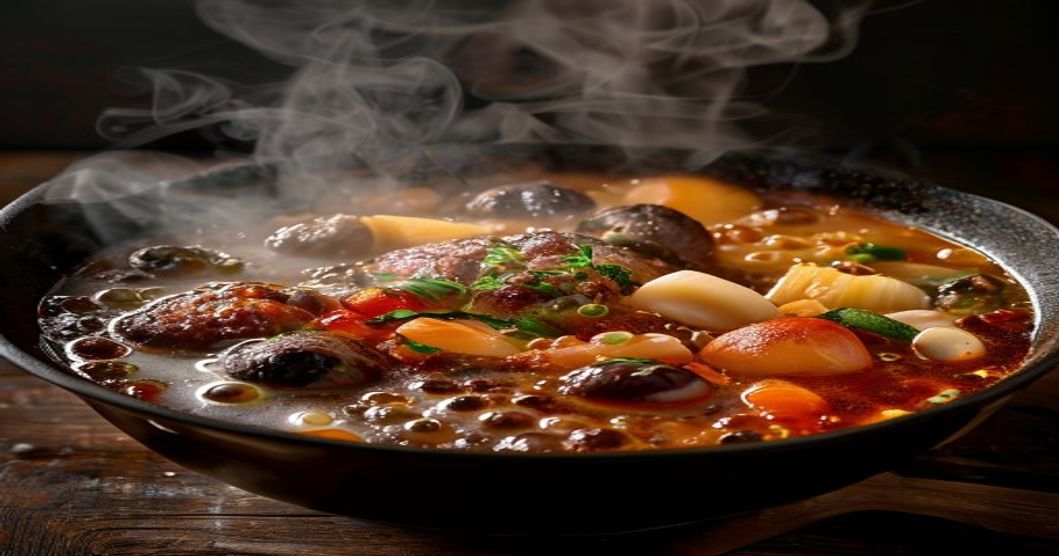
Chankonabe is a large-format hot pot cooked in a single pot over a burner at the table. The base is typically a dashi broth — made from kombu seaweed and bonito flakes — seasoned with soy sauce, miso, or salt depending on the stable’s tradition.
Into this broth goes whatever protein and vegetables are available: chicken thighs, tofu, fish cakes, pork, shrimp, cabbage, mushrooms, daikon radish, green onions, and burdock root. Everything simmers together, absorbing flavor from the broth and from each other.
It is eaten communally, in large quantities, usually followed by rice or mochi (rice cakes) added directly to the remaining broth — a final bowl called ojiya that soaks up all remaining nutrients and flavor.
Why It Works for Muscle Gain
A single chankonabe meal for a rikishi delivers approximately 50-80g of protein, 80-120g of carbohydrates, and 2,000-3,000 calories depending on portion size. Eaten twice daily with rice, this adds up to a reliable 4,000-6,000 calorie intake that scales easily by controlling how much rice and mochi is added.
The nutritional profile is close to optimal for hypertrophy:
- Complete proteins from multiple animal and plant sources (chicken, fish, tofu, eggs)
- Anti-inflammatory micronutrients from the vegetable load — cabbage, mushrooms, and root vegetables are high in potassium, magnesium, and B vitamins
- Collagen and gelatin from bone-in chicken pieces and fish, supporting joint health under heavy training load
- Fermented bases — miso and soy sauce add probiotic benefit and gut-supporting bacteria to every meal
- High water content — the broth format keeps wrestlers hydrated and the gut working efficiently
The Eating and Sleeping Cycle
The traditional sumo schedule is deliberate in its structure:
- 5am-11am: Morning practice on an empty stomach. Training fasted maximizes growth hormone release and sharpens focus.
- 11am-12pm: First chankonabe meal. Large quantities eaten after training maximize the post-workout anabolic window.
- 12pm-3pm: Afternoon nap (inemuri). Sleep immediately after eating spikes insulin and growth hormone simultaneously — accelerating nutrient partitioning into muscle.
- Evening: Second meal, often another chankonabe or a high-calorie variant. More rice, more mochi, sometimes beer.
This cycle — train hard, eat big, sleep immediately — is biomechanically efficient for muscle synthesis in a way that most Western bulk protocols miss entirely.
Using Chankonabe for Your Own Bulk
You do not need to be training for sumo to use this meal system. Chankonabe scales perfectly for recreational athletes in a lean or dirty bulk phase:
| Lean bulk | Use chicken breast and tofu as main proteins. Skip mochi. One bowl of rice. |
| Standard bulk | Chicken thighs, pork, tofu. Two bowls of rice. Ojiya finish. |
| Dirty bulk (sumo mode) | Everything. Rice, mochi, extra broth. Eat until full, sleep, repeat. |
Basic Chankonabe Recipe
Everything below is available at any Japanese supermarket for under 1,500 yen total.
Broth base: 1L water, 1 tbsp dashi powder, 3 tbsp soy sauce, 1 tbsp mirin, 1 tbsp sake. Bring to a simmer.
Proteins: 300g chicken thighs (bone-in if possible), 200g firm tofu cut into cubes, 2 fish cakes (chikuwa) sliced.
Vegetables: Half a cabbage roughly chopped, 4 shiitake mushrooms, 1 pack of enoki mushrooms, 2 green onions sliced, 200g daikon radish sliced thin.
Add proteins first, simmer 10 minutes. Add vegetables, simmer another 5-10 minutes. Serve over rice. Add leftover rice or mochi to the remaining broth for ojiya.
Where to Eat It in Tokyo
The Ryogoku district in eastern Tokyo is sumo country. Several retired wrestlers run chankonabe restaurants within walking distance of the Kokugikan arena. Prices are reasonable — a full chankonabe set with rice runs 1,500-2,500 yen at most spots. Eating chankonabe in Ryogoku, surrounded by sumo memorabilia, prepared by former rikishi, is one of the better food experiences available in Tokyo for under 3,000 yen.
Look for the kanji combination on restaurant signs: most will have some version of the sumo stable name or the word chanko prominently displayed.
The Takeaway
Chankonabe is not complicated. It is broth, protein, and vegetables — the same nutritional fundamentals that have been driving muscle gain for as long as humans have been cooking meat in water.
What makes it remarkable is the system it sits inside: high-intensity training, a massive post-workout meal, immediate sleep, repeat. Japan figured out the post-workout anabolic window centuries before sports nutrition gave it a name.
Make a pot this week. The recipe is simple. The results are not.
Basic Chankonabe Recipe
Everything below is available at any Japanese supermarket for under 1,500 yen total.
Broth base: 1L water, 1 tbsp dashi powder, 3 tbsp soy sauce, 1 tbsp mirin, 1 tbsp sake. Bring to a simmer.
Proteins: 300g chicken thighs (bone-in if possible), 200g firm tofu cut into cubes, 2 fish cakes (chikuwa) sliced.
Vegetables: Half a cabbage roughly chopped, 4 shiitake mushrooms, 1 pack of enoki mushrooms, 2 green onions sliced, 200g daikon radish sliced thin.
Add proteins first, simmer 10 minutes. Add vegetables, simmer another 5-10 minutes. Serve over rice. Add leftover rice or mochi to the remaining broth for ojiya.
Where to Eat It in Tokyo
The Ryogoku district in eastern Tokyo is sumo country. Several retired wrestlers run chankonabe restaurants within walking distance of the Kokugikan arena. Prices are reasonable — a full chankonabe set with rice runs 1,500-2,500 yen at most spots. Eating chankonabe in Ryogoku, surrounded by sumo memorabilia, prepared by former rikishi, is one of the better food experiences available in Tokyo for under 3,000 yen.
Look for the kanji combination on restaurant signs: most will have some version of the sumo stable name or the word chanko prominently displayed.
The Takeaway
Chankonabe is not complicated. It is broth, protein, and vegetables — the same nutritional fundamentals that have been driving muscle gain for as long as humans have been cooking meat in water.
What makes it remarkable is the system it sits inside: high-intensity training, a massive post-workout meal, immediate sleep, repeat. Japan figured out the post-workout anabolic window centuries before sports nutrition gave it a name.
Make a pot this week. The recipe is simple. The results are not.
Most people look at a sumo wrestler and see fat. Sports scientists look at the same person and see something very different: a highly trained athlete carrying extraordinary amounts of both muscle and body fat, built and maintained through one of the most effective bulk-phase nutrition systems ever developed.
The foundation of that system is chankonabe — a hot pot dish eaten twice daily in every sumo stable in Japan. And for anyone serious about putting on size, it deserves a much closer look.
What Sumo Wrestlers Actually Are
Before the food, the context. Top-division sumo wrestlers (rikishi) are not simply large men. A professional rikishi at 150kg typically carries 60-80kg of lean muscle mass — comparable to heavyweight Olympic weightlifters. Their grip strength, explosive power, and cardiovascular conditioning are elite by any standard.
They train two to three hours daily, six days a week, in intense practice sessions that combine grappling, repeated explosive bouts, and high-volume movement. The body that results from this training — and this eating — is not an accident. It is engineered.
What Is Chankonabe?
Chankonabe is a large-format hot pot cooked in a single pot over a burner at the table. The base is typically a dashi broth — made from kombu seaweed and bonito flakes — seasoned with soy sauce, miso, or salt depending on the stable’s tradition.
Into this broth goes whatever protein and vegetables are available: chicken thighs, tofu, fish cakes, pork, shrimp, cabbage, mushrooms, daikon radish, green onions, and burdock root. Everything simmers together, absorbing flavor from the broth and from each other.
It is eaten communally, in large quantities, usually followed by rice or mochi (rice cakes) added directly to the remaining broth — a final bowl called ojiya that soaks up all remaining nutrients and flavor.
Why It Works for Muscle Gain
A single chankonabe meal for a rikishi delivers approximately 50-80g of protein, 80-120g of carbohydrates, and 2,000-3,000 calories depending on portion size. Eaten twice daily with rice, this adds up to a reliable 4,000-6,000 calorie intake that scales easily by controlling how much rice and mochi is added.
The nutritional profile is close to optimal for hypertrophy:
- Complete proteins from multiple animal and plant sources (chicken, fish, tofu, eggs)
- Anti-inflammatory micronutrients from the vegetable load — cabbage, mushrooms, and root vegetables are high in potassium, magnesium, and B vitamins
- Collagen and gelatin from bone-in chicken pieces and fish, supporting joint health under heavy training load
- Fermented bases — miso and soy sauce add probiotic benefit and gut-supporting bacteria to every meal
- High water content — the broth format keeps wrestlers hydrated and the gut working efficiently
The Eating and Sleeping Cycle
The traditional sumo schedule is deliberate in its structure:
- 5am-11am: Morning practice on an empty stomach. Training fasted maximizes growth hormone release and sharpens focus.
- 11am-12pm: First chankonabe meal. Large quantities eaten after training maximize the post-workout anabolic window.
- 12pm-3pm: Afternoon nap (inemuri). Sleep immediately after eating spikes insulin and growth hormone simultaneously — accelerating nutrient partitioning into muscle.
- Evening: Second meal, often another chankonabe or a high-calorie variant. More rice, more mochi, sometimes beer.
This cycle — train hard, eat big, sleep immediately — is biomechanically efficient for muscle synthesis in a way that most Western bulk protocols miss entirely.
Using Chankonabe for Your Own Bulk
You do not need to be training for sumo to use this meal system. Chankonabe scales perfectly for recreational athletes in a lean or dirty bulk phase:
| Lean bulk | Use chicken breast and tofu as main proteins. Skip mochi. One bowl of rice. |
| Standard bulk | Chicken thighs, pork, tofu. Two bowls of rice. Ojiya finish. |
| Dirty bulk (sumo mode) | Everything. Rice, mochi, extra broth. Eat until full, sleep, repeat. |
Basic Chankonabe Recipe
Everything below is available at any Japanese supermarket for under 1,500 yen total.
Broth base: 1L water, 1 tbsp dashi powder, 3 tbsp soy sauce, 1 tbsp mirin, 1 tbsp sake. Bring to a simmer.
Proteins: 300g chicken thighs (bone-in if possible), 200g firm tofu cut into cubes, 2 fish cakes (chikuwa) sliced.
Vegetables: Half a cabbage roughly chopped, 4 shiitake mushrooms, 1 pack of enoki mushrooms, 2 green onions sliced, 200g daikon radish sliced thin.
Add proteins first, simmer 10 minutes. Add vegetables, simmer another 5-10 minutes. Serve over rice. Add leftover rice or mochi to the remaining broth for ojiya.
Where to Eat It in Tokyo
The Ryogoku district in eastern Tokyo is sumo country. Several retired wrestlers run chankonabe restaurants within walking distance of the Kokugikan arena. Prices are reasonable — a full chankonabe set with rice runs 1,500-2,500 yen at most spots. Eating chankonabe in Ryogoku, surrounded by sumo memorabilia, prepared by former rikishi, is one of the better food experiences available in Tokyo for under 3,000 yen.
Look for the kanji combination on restaurant signs: most will have some version of the sumo stable name or the word chanko prominently displayed.
The Takeaway
Chankonabe is not complicated. It is broth, protein, and vegetables — the same nutritional fundamentals that have been driving muscle gain for as long as humans have been cooking meat in water.
What makes it remarkable is the system it sits inside: high-intensity training, a massive post-workout meal, immediate sleep, repeat. Japan figured out the post-workout anabolic window centuries before sports nutrition gave it a name.
Make a pot this week. The recipe is simple. The results are not.
Using Chankonabe for Your Own Bulk
You do not need to be training for sumo to use this meal system. Chankonabe scales perfectly for recreational athletes in a lean or dirty bulk phase:
| Lean bulk | Use chicken breast and tofu as main proteins. Skip mochi. One bowl of rice. |
| Standard bulk | Chicken thighs, pork, tofu. Two bowls of rice. Ojiya finish. |
| Dirty bulk (sumo mode) | Everything. Rice, mochi, extra broth. Eat until full, sleep, repeat. |
Basic Chankonabe Recipe
Everything below is available at any Japanese supermarket for under 1,500 yen total.
Broth base: 1L water, 1 tbsp dashi powder, 3 tbsp soy sauce, 1 tbsp mirin, 1 tbsp sake. Bring to a simmer.
Proteins: 300g chicken thighs (bone-in if possible), 200g firm tofu cut into cubes, 2 fish cakes (chikuwa) sliced.
Vegetables: Half a cabbage roughly chopped, 4 shiitake mushrooms, 1 pack of enoki mushrooms, 2 green onions sliced, 200g daikon radish sliced thin.
Add proteins first, simmer 10 minutes. Add vegetables, simmer another 5-10 minutes. Serve over rice. Add leftover rice or mochi to the remaining broth for ojiya.
Where to Eat It in Tokyo
The Ryogoku district in eastern Tokyo is sumo country. Several retired wrestlers run chankonabe restaurants within walking distance of the Kokugikan arena. Prices are reasonable — a full chankonabe set with rice runs 1,500-2,500 yen at most spots. Eating chankonabe in Ryogoku, surrounded by sumo memorabilia, prepared by former rikishi, is one of the better food experiences available in Tokyo for under 3,000 yen.
Look for the kanji combination on restaurant signs: most will have some version of the sumo stable name or the word chanko prominently displayed.
The Takeaway
Chankonabe is not complicated. It is broth, protein, and vegetables — the same nutritional fundamentals that have been driving muscle gain for as long as humans have been cooking meat in water.
What makes it remarkable is the system it sits inside: high-intensity training, a massive post-workout meal, immediate sleep, repeat. Japan figured out the post-workout anabolic window centuries before sports nutrition gave it a name.
Make a pot this week. The recipe is simple. The results are not.
Most people look at a sumo wrestler and see fat. Sports scientists look at the same person and see something very different: a highly trained athlete carrying extraordinary amounts of both muscle and body fat, built and maintained through one of the most effective bulk-phase nutrition systems ever developed.
The foundation of that system is chankonabe — a hot pot dish eaten twice daily in every sumo stable in Japan. And for anyone serious about putting on size, it deserves a much closer look.
What Sumo Wrestlers Actually Are
Before the food, the context. Top-division sumo wrestlers (rikishi) are not simply large men. A professional rikishi at 150kg typically carries 60-80kg of lean muscle mass — comparable to heavyweight Olympic weightlifters. Their grip strength, explosive power, and cardiovascular conditioning are elite by any standard.
They train two to three hours daily, six days a week, in intense practice sessions that combine grappling, repeated explosive bouts, and high-volume movement. The body that results from this training — and this eating — is not an accident. It is engineered.
What Is Chankonabe?
Chankonabe is a large-format hot pot cooked in a single pot over a burner at the table. The base is typically a dashi broth — made from kombu seaweed and bonito flakes — seasoned with soy sauce, miso, or salt depending on the stable’s tradition.
Into this broth goes whatever protein and vegetables are available: chicken thighs, tofu, fish cakes, pork, shrimp, cabbage, mushrooms, daikon radish, green onions, and burdock root. Everything simmers together, absorbing flavor from the broth and from each other.
It is eaten communally, in large quantities, usually followed by rice or mochi (rice cakes) added directly to the remaining broth — a final bowl called ojiya that soaks up all remaining nutrients and flavor.
Why It Works for Muscle Gain
A single chankonabe meal for a rikishi delivers approximately 50-80g of protein, 80-120g of carbohydrates, and 2,000-3,000 calories depending on portion size. Eaten twice daily with rice, this adds up to a reliable 4,000-6,000 calorie intake that scales easily by controlling how much rice and mochi is added.
The nutritional profile is close to optimal for hypertrophy:
- Complete proteins from multiple animal and plant sources (chicken, fish, tofu, eggs)
- Anti-inflammatory micronutrients from the vegetable load — cabbage, mushrooms, and root vegetables are high in potassium, magnesium, and B vitamins
- Collagen and gelatin from bone-in chicken pieces and fish, supporting joint health under heavy training load
- Fermented bases — miso and soy sauce add probiotic benefit and gut-supporting bacteria to every meal
- High water content — the broth format keeps wrestlers hydrated and the gut working efficiently
The Eating and Sleeping Cycle
The traditional sumo schedule is deliberate in its structure:
- 5am-11am: Morning practice on an empty stomach. Training fasted maximizes growth hormone release and sharpens focus.
- 11am-12pm: First chankonabe meal. Large quantities eaten after training maximize the post-workout anabolic window.
- 12pm-3pm: Afternoon nap (inemuri). Sleep immediately after eating spikes insulin and growth hormone simultaneously — accelerating nutrient partitioning into muscle.
- Evening: Second meal, often another chankonabe or a high-calorie variant. More rice, more mochi, sometimes beer.
This cycle — train hard, eat big, sleep immediately — is biomechanically efficient for muscle synthesis in a way that most Western bulk protocols miss entirely.
Using Chankonabe for Your Own Bulk
You do not need to be training for sumo to use this meal system. Chankonabe scales perfectly for recreational athletes in a lean or dirty bulk phase:
| Lean bulk | Use chicken breast and tofu as main proteins. Skip mochi. One bowl of rice. |
| Standard bulk | Chicken thighs, pork, tofu. Two bowls of rice. Ojiya finish. |
| Dirty bulk (sumo mode) | Everything. Rice, mochi, extra broth. Eat until full, sleep, repeat. |
Basic Chankonabe Recipe
Everything below is available at any Japanese supermarket for under 1,500 yen total.
Broth base: 1L water, 1 tbsp dashi powder, 3 tbsp soy sauce, 1 tbsp mirin, 1 tbsp sake. Bring to a simmer.
Proteins: 300g chicken thighs (bone-in if possible), 200g firm tofu cut into cubes, 2 fish cakes (chikuwa) sliced.
Vegetables: Half a cabbage roughly chopped, 4 shiitake mushrooms, 1 pack of enoki mushrooms, 2 green onions sliced, 200g daikon radish sliced thin.
Add proteins first, simmer 10 minutes. Add vegetables, simmer another 5-10 minutes. Serve over rice. Add leftover rice or mochi to the remaining broth for ojiya.
Where to Eat It in Tokyo
The Ryogoku district in eastern Tokyo is sumo country. Several retired wrestlers run chankonabe restaurants within walking distance of the Kokugikan arena. Prices are reasonable — a full chankonabe set with rice runs 1,500-2,500 yen at most spots. Eating chankonabe in Ryogoku, surrounded by sumo memorabilia, prepared by former rikishi, is one of the better food experiences available in Tokyo for under 3,000 yen.
Look for the kanji combination on restaurant signs: most will have some version of the sumo stable name or the word chanko prominently displayed.
The Takeaway
Chankonabe is not complicated. It is broth, protein, and vegetables — the same nutritional fundamentals that have been driving muscle gain for as long as humans have been cooking meat in water.
What makes it remarkable is the system it sits inside: high-intensity training, a massive post-workout meal, immediate sleep, repeat. Japan figured out the post-workout anabolic window centuries before sports nutrition gave it a name.
Make a pot this week. The recipe is simple. The results are not.
The Eating and Sleeping Cycle
The traditional sumo schedule is deliberate in its structure:
- 5am-11am: Morning practice on an empty stomach. Training fasted maximizes growth hormone release and sharpens focus.
- 11am-12pm: First chankonabe meal. Large quantities eaten after training maximize the post-workout anabolic window.
- 12pm-3pm: Afternoon nap (inemuri). Sleep immediately after eating spikes insulin and growth hormone simultaneously — accelerating nutrient partitioning into muscle.
- Evening: Second meal, often another chankonabe or a high-calorie variant. More rice, more mochi, sometimes beer.
This cycle — train hard, eat big, sleep immediately — is biomechanically efficient for muscle synthesis in a way that most Western bulk protocols miss entirely.
Using Chankonabe for Your Own Bulk
You do not need to be training for sumo to use this meal system. Chankonabe scales perfectly for recreational athletes in a lean or dirty bulk phase:
| Lean bulk | Use chicken breast and tofu as main proteins. Skip mochi. One bowl of rice. |
| Standard bulk | Chicken thighs, pork, tofu. Two bowls of rice. Ojiya finish. |
| Dirty bulk (sumo mode) | Everything. Rice, mochi, extra broth. Eat until full, sleep, repeat. |
Basic Chankonabe Recipe
Everything below is available at any Japanese supermarket for under 1,500 yen total.
Broth base: 1L water, 1 tbsp dashi powder, 3 tbsp soy sauce, 1 tbsp mirin, 1 tbsp sake. Bring to a simmer.
Proteins: 300g chicken thighs (bone-in if possible), 200g firm tofu cut into cubes, 2 fish cakes (chikuwa) sliced.
Vegetables: Half a cabbage roughly chopped, 4 shiitake mushrooms, 1 pack of enoki mushrooms, 2 green onions sliced, 200g daikon radish sliced thin.
Add proteins first, simmer 10 minutes. Add vegetables, simmer another 5-10 minutes. Serve over rice. Add leftover rice or mochi to the remaining broth for ojiya.
Where to Eat It in Tokyo
The Ryogoku district in eastern Tokyo is sumo country. Several retired wrestlers run chankonabe restaurants within walking distance of the Kokugikan arena. Prices are reasonable — a full chankonabe set with rice runs 1,500-2,500 yen at most spots. Eating chankonabe in Ryogoku, surrounded by sumo memorabilia, prepared by former rikishi, is one of the better food experiences available in Tokyo for under 3,000 yen.
Look for the kanji combination on restaurant signs: most will have some version of the sumo stable name or the word chanko prominently displayed.
The Takeaway
Chankonabe is not complicated. It is broth, protein, and vegetables — the same nutritional fundamentals that have been driving muscle gain for as long as humans have been cooking meat in water.
What makes it remarkable is the system it sits inside: high-intensity training, a massive post-workout meal, immediate sleep, repeat. Japan figured out the post-workout anabolic window centuries before sports nutrition gave it a name.
Make a pot this week. The recipe is simple. The results are not.
Most people look at a sumo wrestler and see fat. Sports scientists look at the same person and see something very different: a highly trained athlete carrying extraordinary amounts of both muscle and body fat, built and maintained through one of the most effective bulk-phase nutrition systems ever developed.
The foundation of that system is chankonabe — a hot pot dish eaten twice daily in every sumo stable in Japan. And for anyone serious about putting on size, it deserves a much closer look.
What Sumo Wrestlers Actually Are
Before the food, the context. Top-division sumo wrestlers (rikishi) are not simply large men. A professional rikishi at 150kg typically carries 60-80kg of lean muscle mass — comparable to heavyweight Olympic weightlifters. Their grip strength, explosive power, and cardiovascular conditioning are elite by any standard.
They train two to three hours daily, six days a week, in intense practice sessions that combine grappling, repeated explosive bouts, and high-volume movement. The body that results from this training — and this eating — is not an accident. It is engineered.
What Is Chankonabe?
Chankonabe is a large-format hot pot cooked in a single pot over a burner at the table. The base is typically a dashi broth — made from kombu seaweed and bonito flakes — seasoned with soy sauce, miso, or salt depending on the stable’s tradition.
Into this broth goes whatever protein and vegetables are available: chicken thighs, tofu, fish cakes, pork, shrimp, cabbage, mushrooms, daikon radish, green onions, and burdock root. Everything simmers together, absorbing flavor from the broth and from each other.
It is eaten communally, in large quantities, usually followed by rice or mochi (rice cakes) added directly to the remaining broth — a final bowl called ojiya that soaks up all remaining nutrients and flavor.
Why It Works for Muscle Gain
A single chankonabe meal for a rikishi delivers approximately 50-80g of protein, 80-120g of carbohydrates, and 2,000-3,000 calories depending on portion size. Eaten twice daily with rice, this adds up to a reliable 4,000-6,000 calorie intake that scales easily by controlling how much rice and mochi is added.
The nutritional profile is close to optimal for hypertrophy:
- Complete proteins from multiple animal and plant sources (chicken, fish, tofu, eggs)
- Anti-inflammatory micronutrients from the vegetable load — cabbage, mushrooms, and root vegetables are high in potassium, magnesium, and B vitamins
- Collagen and gelatin from bone-in chicken pieces and fish, supporting joint health under heavy training load
- Fermented bases — miso and soy sauce add probiotic benefit and gut-supporting bacteria to every meal
- High water content — the broth format keeps wrestlers hydrated and the gut working efficiently
The Eating and Sleeping Cycle
The traditional sumo schedule is deliberate in its structure:
- 5am-11am: Morning practice on an empty stomach. Training fasted maximizes growth hormone release and sharpens focus.
- 11am-12pm: First chankonabe meal. Large quantities eaten after training maximize the post-workout anabolic window.
- 12pm-3pm: Afternoon nap (inemuri). Sleep immediately after eating spikes insulin and growth hormone simultaneously — accelerating nutrient partitioning into muscle.
- Evening: Second meal, often another chankonabe or a high-calorie variant. More rice, more mochi, sometimes beer.
This cycle — train hard, eat big, sleep immediately — is biomechanically efficient for muscle synthesis in a way that most Western bulk protocols miss entirely.
Using Chankonabe for Your Own Bulk
You do not need to be training for sumo to use this meal system. Chankonabe scales perfectly for recreational athletes in a lean or dirty bulk phase:
| Lean bulk | Use chicken breast and tofu as main proteins. Skip mochi. One bowl of rice. |
| Standard bulk | Chicken thighs, pork, tofu. Two bowls of rice. Ojiya finish. |
| Dirty bulk (sumo mode) | Everything. Rice, mochi, extra broth. Eat until full, sleep, repeat. |
Basic Chankonabe Recipe
Everything below is available at any Japanese supermarket for under 1,500 yen total.
Broth base: 1L water, 1 tbsp dashi powder, 3 tbsp soy sauce, 1 tbsp mirin, 1 tbsp sake. Bring to a simmer.
Proteins: 300g chicken thighs (bone-in if possible), 200g firm tofu cut into cubes, 2 fish cakes (chikuwa) sliced.
Vegetables: Half a cabbage roughly chopped, 4 shiitake mushrooms, 1 pack of enoki mushrooms, 2 green onions sliced, 200g daikon radish sliced thin.
Add proteins first, simmer 10 minutes. Add vegetables, simmer another 5-10 minutes. Serve over rice. Add leftover rice or mochi to the remaining broth for ojiya.
Where to Eat It in Tokyo
The Ryogoku district in eastern Tokyo is sumo country. Several retired wrestlers run chankonabe restaurants within walking distance of the Kokugikan arena. Prices are reasonable — a full chankonabe set with rice runs 1,500-2,500 yen at most spots. Eating chankonabe in Ryogoku, surrounded by sumo memorabilia, prepared by former rikishi, is one of the better food experiences available in Tokyo for under 3,000 yen.
Look for the kanji combination on restaurant signs: most will have some version of the sumo stable name or the word chanko prominently displayed.
The Takeaway
Chankonabe is not complicated. It is broth, protein, and vegetables — the same nutritional fundamentals that have been driving muscle gain for as long as humans have been cooking meat in water.
What makes it remarkable is the system it sits inside: high-intensity training, a massive post-workout meal, immediate sleep, repeat. Japan figured out the post-workout anabolic window centuries before sports nutrition gave it a name.
Make a pot this week. The recipe is simple. The results are not.
Why It Works for Muscle Gain
A single chankonabe meal for a rikishi delivers approximately 50-80g of protein, 80-120g of carbohydrates, and 2,000-3,000 calories depending on portion size. Eaten twice daily with rice, this adds up to a reliable 4,000-6,000 calorie intake that scales easily by controlling how much rice and mochi is added.
The nutritional profile is close to optimal for hypertrophy:
- Complete proteins from multiple animal and plant sources (chicken, fish, tofu, eggs)
- Anti-inflammatory micronutrients from the vegetable load — cabbage, mushrooms, and root vegetables are high in potassium, magnesium, and B vitamins
- Collagen and gelatin from bone-in chicken pieces and fish, supporting joint health under heavy training load
- Fermented bases — miso and soy sauce add probiotic benefit and gut-supporting bacteria to every meal
- High water content — the broth format keeps wrestlers hydrated and the gut working efficiently
The Eating and Sleeping Cycle
The traditional sumo schedule is deliberate in its structure:
- 5am-11am: Morning practice on an empty stomach. Training fasted maximizes growth hormone release and sharpens focus.
- 11am-12pm: First chankonabe meal. Large quantities eaten after training maximize the post-workout anabolic window.
- 12pm-3pm: Afternoon nap (inemuri). Sleep immediately after eating spikes insulin and growth hormone simultaneously — accelerating nutrient partitioning into muscle.
- Evening: Second meal, often another chankonabe or a high-calorie variant. More rice, more mochi, sometimes beer.
This cycle — train hard, eat big, sleep immediately — is biomechanically efficient for muscle synthesis in a way that most Western bulk protocols miss entirely.
Using Chankonabe for Your Own Bulk
You do not need to be training for sumo to use this meal system. Chankonabe scales perfectly for recreational athletes in a lean or dirty bulk phase:
| Lean bulk | Use chicken breast and tofu as main proteins. Skip mochi. One bowl of rice. |
| Standard bulk | Chicken thighs, pork, tofu. Two bowls of rice. Ojiya finish. |
| Dirty bulk (sumo mode) | Everything. Rice, mochi, extra broth. Eat until full, sleep, repeat. |
Basic Chankonabe Recipe
Everything below is available at any Japanese supermarket for under 1,500 yen total.
Broth base: 1L water, 1 tbsp dashi powder, 3 tbsp soy sauce, 1 tbsp mirin, 1 tbsp sake. Bring to a simmer.
Proteins: 300g chicken thighs (bone-in if possible), 200g firm tofu cut into cubes, 2 fish cakes (chikuwa) sliced.
Vegetables: Half a cabbage roughly chopped, 4 shiitake mushrooms, 1 pack of enoki mushrooms, 2 green onions sliced, 200g daikon radish sliced thin.
Add proteins first, simmer 10 minutes. Add vegetables, simmer another 5-10 minutes. Serve over rice. Add leftover rice or mochi to the remaining broth for ojiya.
Where to Eat It in Tokyo
The Ryogoku district in eastern Tokyo is sumo country. Several retired wrestlers run chankonabe restaurants within walking distance of the Kokugikan arena. Prices are reasonable — a full chankonabe set with rice runs 1,500-2,500 yen at most spots. Eating chankonabe in Ryogoku, surrounded by sumo memorabilia, prepared by former rikishi, is one of the better food experiences available in Tokyo for under 3,000 yen.
Look for the kanji combination on restaurant signs: most will have some version of the sumo stable name or the word chanko prominently displayed.
The Takeaway
Chankonabe is not complicated. It is broth, protein, and vegetables — the same nutritional fundamentals that have been driving muscle gain for as long as humans have been cooking meat in water.
What makes it remarkable is the system it sits inside: high-intensity training, a massive post-workout meal, immediate sleep, repeat. Japan figured out the post-workout anabolic window centuries before sports nutrition gave it a name.
Make a pot this week. The recipe is simple. The results are not.
Most people look at a sumo wrestler and see fat. Sports scientists look at the same person and see something very different: a highly trained athlete carrying extraordinary amounts of both muscle and body fat, built and maintained through one of the most effective bulk-phase nutrition systems ever developed.
The foundation of that system is chankonabe — a hot pot dish eaten twice daily in every sumo stable in Japan. And for anyone serious about putting on size, it deserves a much closer look.
What Sumo Wrestlers Actually Are
Before the food, the context. Top-division sumo wrestlers (rikishi) are not simply large men. A professional rikishi at 150kg typically carries 60-80kg of lean muscle mass — comparable to heavyweight Olympic weightlifters. Their grip strength, explosive power, and cardiovascular conditioning are elite by any standard.
They train two to three hours daily, six days a week, in intense practice sessions that combine grappling, repeated explosive bouts, and high-volume movement. The body that results from this training — and this eating — is not an accident. It is engineered.
What Is Chankonabe?
Chankonabe is a large-format hot pot cooked in a single pot over a burner at the table. The base is typically a dashi broth — made from kombu seaweed and bonito flakes — seasoned with soy sauce, miso, or salt depending on the stable’s tradition.
Into this broth goes whatever protein and vegetables are available: chicken thighs, tofu, fish cakes, pork, shrimp, cabbage, mushrooms, daikon radish, green onions, and burdock root. Everything simmers together, absorbing flavor from the broth and from each other.
It is eaten communally, in large quantities, usually followed by rice or mochi (rice cakes) added directly to the remaining broth — a final bowl called ojiya that soaks up all remaining nutrients and flavor.
Why It Works for Muscle Gain
A single chankonabe meal for a rikishi delivers approximately 50-80g of protein, 80-120g of carbohydrates, and 2,000-3,000 calories depending on portion size. Eaten twice daily with rice, this adds up to a reliable 4,000-6,000 calorie intake that scales easily by controlling how much rice and mochi is added.
The nutritional profile is close to optimal for hypertrophy:
- Complete proteins from multiple animal and plant sources (chicken, fish, tofu, eggs)
- Anti-inflammatory micronutrients from the vegetable load — cabbage, mushrooms, and root vegetables are high in potassium, magnesium, and B vitamins
- Collagen and gelatin from bone-in chicken pieces and fish, supporting joint health under heavy training load
- Fermented bases — miso and soy sauce add probiotic benefit and gut-supporting bacteria to every meal
- High water content — the broth format keeps wrestlers hydrated and the gut working efficiently
The Eating and Sleeping Cycle
The traditional sumo schedule is deliberate in its structure:
- 5am-11am: Morning practice on an empty stomach. Training fasted maximizes growth hormone release and sharpens focus.
- 11am-12pm: First chankonabe meal. Large quantities eaten after training maximize the post-workout anabolic window.
- 12pm-3pm: Afternoon nap (inemuri). Sleep immediately after eating spikes insulin and growth hormone simultaneously — accelerating nutrient partitioning into muscle.
- Evening: Second meal, often another chankonabe or a high-calorie variant. More rice, more mochi, sometimes beer.
This cycle — train hard, eat big, sleep immediately — is biomechanically efficient for muscle synthesis in a way that most Western bulk protocols miss entirely.
Using Chankonabe for Your Own Bulk
You do not need to be training for sumo to use this meal system. Chankonabe scales perfectly for recreational athletes in a lean or dirty bulk phase:
| Lean bulk | Use chicken breast and tofu as main proteins. Skip mochi. One bowl of rice. |
| Standard bulk | Chicken thighs, pork, tofu. Two bowls of rice. Ojiya finish. |
| Dirty bulk (sumo mode) | Everything. Rice, mochi, extra broth. Eat until full, sleep, repeat. |
Basic Chankonabe Recipe
Everything below is available at any Japanese supermarket for under 1,500 yen total.
Broth base: 1L water, 1 tbsp dashi powder, 3 tbsp soy sauce, 1 tbsp mirin, 1 tbsp sake. Bring to a simmer.
Proteins: 300g chicken thighs (bone-in if possible), 200g firm tofu cut into cubes, 2 fish cakes (chikuwa) sliced.
Vegetables: Half a cabbage roughly chopped, 4 shiitake mushrooms, 1 pack of enoki mushrooms, 2 green onions sliced, 200g daikon radish sliced thin.
Add proteins first, simmer 10 minutes. Add vegetables, simmer another 5-10 minutes. Serve over rice. Add leftover rice or mochi to the remaining broth for ojiya.
Where to Eat It in Tokyo
The Ryogoku district in eastern Tokyo is sumo country. Several retired wrestlers run chankonabe restaurants within walking distance of the Kokugikan arena. Prices are reasonable — a full chankonabe set with rice runs 1,500-2,500 yen at most spots. Eating chankonabe in Ryogoku, surrounded by sumo memorabilia, prepared by former rikishi, is one of the better food experiences available in Tokyo for under 3,000 yen.
Look for the kanji combination on restaurant signs: most will have some version of the sumo stable name or the word chanko prominently displayed.
The Takeaway
Chankonabe is not complicated. It is broth, protein, and vegetables — the same nutritional fundamentals that have been driving muscle gain for as long as humans have been cooking meat in water.
What makes it remarkable is the system it sits inside: high-intensity training, a massive post-workout meal, immediate sleep, repeat. Japan figured out the post-workout anabolic window centuries before sports nutrition gave it a name.
Make a pot this week. The recipe is simple. The results are not.
Basic Chankonabe Recipe
Everything below is available at any Japanese supermarket for under 1,500 yen total.
Broth base: 1L water, 1 tbsp dashi powder, 3 tbsp soy sauce, 1 tbsp mirin, 1 tbsp sake. Bring to a simmer.
Proteins: 300g chicken thighs (bone-in if possible), 200g firm tofu cut into cubes, 2 fish cakes (chikuwa) sliced.
Vegetables: Half a cabbage roughly chopped, 4 shiitake mushrooms, 1 pack of enoki mushrooms, 2 green onions sliced, 200g daikon radish sliced thin.
Add proteins first, simmer 10 minutes. Add vegetables, simmer another 5-10 minutes. Serve over rice. Add leftover rice or mochi to the remaining broth for ojiya.
Where to Eat It in Tokyo
The Ryogoku district in eastern Tokyo is sumo country. Several retired wrestlers run chankonabe restaurants within walking distance of the Kokugikan arena. Prices are reasonable — a full chankonabe set with rice runs 1,500-2,500 yen at most spots. Eating chankonabe in Ryogoku, surrounded by sumo memorabilia, prepared by former rikishi, is one of the better food experiences available in Tokyo for under 3,000 yen.
Look for the kanji combination on restaurant signs: most will have some version of the sumo stable name or the word chanko prominently displayed.
The Takeaway
Chankonabe is not complicated. It is broth, protein, and vegetables — the same nutritional fundamentals that have been driving muscle gain for as long as humans have been cooking meat in water.
What makes it remarkable is the system it sits inside: high-intensity training, a massive post-workout meal, immediate sleep, repeat. Japan figured out the post-workout anabolic window centuries before sports nutrition gave it a name.
Make a pot this week. The recipe is simple. The results are not.
Why It Works for Muscle Gain
A single chankonabe meal for a rikishi delivers approximately 50-80g of protein, 80-120g of carbohydrates, and 2,000-3,000 calories depending on portion size. Eaten twice daily with rice, this adds up to a reliable 4,000-6,000 calorie intake that scales easily by controlling how much rice and mochi is added.
The nutritional profile is close to optimal for hypertrophy:
- Complete proteins from multiple animal and plant sources (chicken, fish, tofu, eggs)
- Anti-inflammatory micronutrients from the vegetable load — cabbage, mushrooms, and root vegetables are high in potassium, magnesium, and B vitamins
- Collagen and gelatin from bone-in chicken pieces and fish, supporting joint health under heavy training load
- Fermented bases — miso and soy sauce add probiotic benefit and gut-supporting bacteria to every meal
- High water content — the broth format keeps wrestlers hydrated and the gut working efficiently
The Eating and Sleeping Cycle
The traditional sumo schedule is deliberate in its structure:
- 5am-11am: Morning practice on an empty stomach. Training fasted maximizes growth hormone release and sharpens focus.
- 11am-12pm: First chankonabe meal. Large quantities eaten after training maximize the post-workout anabolic window.
- 12pm-3pm: Afternoon nap (inemuri). Sleep immediately after eating spikes insulin and growth hormone simultaneously — accelerating nutrient partitioning into muscle.
- Evening: Second meal, often another chankonabe or a high-calorie variant. More rice, more mochi, sometimes beer.
This cycle — train hard, eat big, sleep immediately — is biomechanically efficient for muscle synthesis in a way that most Western bulk protocols miss entirely.
Using Chankonabe for Your Own Bulk
You do not need to be training for sumo to use this meal system. Chankonabe scales perfectly for recreational athletes in a lean or dirty bulk phase:
| Lean bulk | Use chicken breast and tofu as main proteins. Skip mochi. One bowl of rice. |
| Standard bulk | Chicken thighs, pork, tofu. Two bowls of rice. Ojiya finish. |
| Dirty bulk (sumo mode) | Everything. Rice, mochi, extra broth. Eat until full, sleep, repeat. |
Basic Chankonabe Recipe
Everything below is available at any Japanese supermarket for under 1,500 yen total.
Broth base: 1L water, 1 tbsp dashi powder, 3 tbsp soy sauce, 1 tbsp mirin, 1 tbsp sake. Bring to a simmer.
Proteins: 300g chicken thighs (bone-in if possible), 200g firm tofu cut into cubes, 2 fish cakes (chikuwa) sliced.
Vegetables: Half a cabbage roughly chopped, 4 shiitake mushrooms, 1 pack of enoki mushrooms, 2 green onions sliced, 200g daikon radish sliced thin.
Add proteins first, simmer 10 minutes. Add vegetables, simmer another 5-10 minutes. Serve over rice. Add leftover rice or mochi to the remaining broth for ojiya.
Where to Eat It in Tokyo
The Ryogoku district in eastern Tokyo is sumo country. Several retired wrestlers run chankonabe restaurants within walking distance of the Kokugikan arena. Prices are reasonable — a full chankonabe set with rice runs 1,500-2,500 yen at most spots. Eating chankonabe in Ryogoku, surrounded by sumo memorabilia, prepared by former rikishi, is one of the better food experiences available in Tokyo for under 3,000 yen.
Look for the kanji combination on restaurant signs: most will have some version of the sumo stable name or the word chanko prominently displayed.
The Takeaway
Chankonabe is not complicated. It is broth, protein, and vegetables — the same nutritional fundamentals that have been driving muscle gain for as long as humans have been cooking meat in water.
What makes it remarkable is the system it sits inside: high-intensity training, a massive post-workout meal, immediate sleep, repeat. Japan figured out the post-workout anabolic window centuries before sports nutrition gave it a name.
Make a pot this week. The recipe is simple. The results are not.
Most people look at a sumo wrestler and see fat. Sports scientists look at the same person and see something very different: a highly trained athlete carrying extraordinary amounts of both muscle and body fat, built and maintained through one of the most effective bulk-phase nutrition systems ever developed.
The foundation of that system is chankonabe — a hot pot dish eaten twice daily in every sumo stable in Japan. And for anyone serious about putting on size, it deserves a much closer look.
What Sumo Wrestlers Actually Are
Before the food, the context. Top-division sumo wrestlers (rikishi) are not simply large men. A professional rikishi at 150kg typically carries 60-80kg of lean muscle mass — comparable to heavyweight Olympic weightlifters. Their grip strength, explosive power, and cardiovascular conditioning are elite by any standard.
They train two to three hours daily, six days a week, in intense practice sessions that combine grappling, repeated explosive bouts, and high-volume movement. The body that results from this training — and this eating — is not an accident. It is engineered.
What Is Chankonabe?
Chankonabe is a large-format hot pot cooked in a single pot over a burner at the table. The base is typically a dashi broth — made from kombu seaweed and bonito flakes — seasoned with soy sauce, miso, or salt depending on the stable’s tradition.
Into this broth goes whatever protein and vegetables are available: chicken thighs, tofu, fish cakes, pork, shrimp, cabbage, mushrooms, daikon radish, green onions, and burdock root. Everything simmers together, absorbing flavor from the broth and from each other.
It is eaten communally, in large quantities, usually followed by rice or mochi (rice cakes) added directly to the remaining broth — a final bowl called ojiya that soaks up all remaining nutrients and flavor.
Why It Works for Muscle Gain
A single chankonabe meal for a rikishi delivers approximately 50-80g of protein, 80-120g of carbohydrates, and 2,000-3,000 calories depending on portion size. Eaten twice daily with rice, this adds up to a reliable 4,000-6,000 calorie intake that scales easily by controlling how much rice and mochi is added.
The nutritional profile is close to optimal for hypertrophy:
- Complete proteins from multiple animal and plant sources (chicken, fish, tofu, eggs)
- Anti-inflammatory micronutrients from the vegetable load — cabbage, mushrooms, and root vegetables are high in potassium, magnesium, and B vitamins
- Collagen and gelatin from bone-in chicken pieces and fish, supporting joint health under heavy training load
- Fermented bases — miso and soy sauce add probiotic benefit and gut-supporting bacteria to every meal
- High water content — the broth format keeps wrestlers hydrated and the gut working efficiently
The Eating and Sleeping Cycle
The traditional sumo schedule is deliberate in its structure:
- 5am-11am: Morning practice on an empty stomach. Training fasted maximizes growth hormone release and sharpens focus.
- 11am-12pm: First chankonabe meal. Large quantities eaten after training maximize the post-workout anabolic window.
- 12pm-3pm: Afternoon nap (inemuri). Sleep immediately after eating spikes insulin and growth hormone simultaneously — accelerating nutrient partitioning into muscle.
- Evening: Second meal, often another chankonabe or a high-calorie variant. More rice, more mochi, sometimes beer.
This cycle — train hard, eat big, sleep immediately — is biomechanically efficient for muscle synthesis in a way that most Western bulk protocols miss entirely.
Using Chankonabe for Your Own Bulk
You do not need to be training for sumo to use this meal system. Chankonabe scales perfectly for recreational athletes in a lean or dirty bulk phase:
| Lean bulk | Use chicken breast and tofu as main proteins. Skip mochi. One bowl of rice. |
| Standard bulk | Chicken thighs, pork, tofu. Two bowls of rice. Ojiya finish. |
| Dirty bulk (sumo mode) | Everything. Rice, mochi, extra broth. Eat until full, sleep, repeat. |
Basic Chankonabe Recipe
Everything below is available at any Japanese supermarket for under 1,500 yen total.
Broth base: 1L water, 1 tbsp dashi powder, 3 tbsp soy sauce, 1 tbsp mirin, 1 tbsp sake. Bring to a simmer.
Proteins: 300g chicken thighs (bone-in if possible), 200g firm tofu cut into cubes, 2 fish cakes (chikuwa) sliced.
Vegetables: Half a cabbage roughly chopped, 4 shiitake mushrooms, 1 pack of enoki mushrooms, 2 green onions sliced, 200g daikon radish sliced thin.
Add proteins first, simmer 10 minutes. Add vegetables, simmer another 5-10 minutes. Serve over rice. Add leftover rice or mochi to the remaining broth for ojiya.
Where to Eat It in Tokyo
The Ryogoku district in eastern Tokyo is sumo country. Several retired wrestlers run chankonabe restaurants within walking distance of the Kokugikan arena. Prices are reasonable — a full chankonabe set with rice runs 1,500-2,500 yen at most spots. Eating chankonabe in Ryogoku, surrounded by sumo memorabilia, prepared by former rikishi, is one of the better food experiences available in Tokyo for under 3,000 yen.
Look for the kanji combination on restaurant signs: most will have some version of the sumo stable name or the word chanko prominently displayed.
The Takeaway
Chankonabe is not complicated. It is broth, protein, and vegetables — the same nutritional fundamentals that have been driving muscle gain for as long as humans have been cooking meat in water.
What makes it remarkable is the system it sits inside: high-intensity training, a massive post-workout meal, immediate sleep, repeat. Japan figured out the post-workout anabolic window centuries before sports nutrition gave it a name.
Make a pot this week. The recipe is simple. The results are not.
Using Chankonabe for Your Own Bulk
You do not need to be training for sumo to use this meal system. Chankonabe scales perfectly for recreational athletes in a lean or dirty bulk phase:
| Lean bulk | Use chicken breast and tofu as main proteins. Skip mochi. One bowl of rice. |
| Standard bulk | Chicken thighs, pork, tofu. Two bowls of rice. Ojiya finish. |
| Dirty bulk (sumo mode) | Everything. Rice, mochi, extra broth. Eat until full, sleep, repeat. |
Basic Chankonabe Recipe
Everything below is available at any Japanese supermarket for under 1,500 yen total.
Broth base: 1L water, 1 tbsp dashi powder, 3 tbsp soy sauce, 1 tbsp mirin, 1 tbsp sake. Bring to a simmer.
Proteins: 300g chicken thighs (bone-in if possible), 200g firm tofu cut into cubes, 2 fish cakes (chikuwa) sliced.
Vegetables: Half a cabbage roughly chopped, 4 shiitake mushrooms, 1 pack of enoki mushrooms, 2 green onions sliced, 200g daikon radish sliced thin.
Add proteins first, simmer 10 minutes. Add vegetables, simmer another 5-10 minutes. Serve over rice. Add leftover rice or mochi to the remaining broth for ojiya.
Where to Eat It in Tokyo
The Ryogoku district in eastern Tokyo is sumo country. Several retired wrestlers run chankonabe restaurants within walking distance of the Kokugikan arena. Prices are reasonable — a full chankonabe set with rice runs 1,500-2,500 yen at most spots. Eating chankonabe in Ryogoku, surrounded by sumo memorabilia, prepared by former rikishi, is one of the better food experiences available in Tokyo for under 3,000 yen.
Look for the kanji combination on restaurant signs: most will have some version of the sumo stable name or the word chanko prominently displayed.
The Takeaway
Chankonabe is not complicated. It is broth, protein, and vegetables — the same nutritional fundamentals that have been driving muscle gain for as long as humans have been cooking meat in water.
What makes it remarkable is the system it sits inside: high-intensity training, a massive post-workout meal, immediate sleep, repeat. Japan figured out the post-workout anabolic window centuries before sports nutrition gave it a name.
Make a pot this week. The recipe is simple. The results are not.
Why It Works for Muscle Gain
A single chankonabe meal for a rikishi delivers approximately 50-80g of protein, 80-120g of carbohydrates, and 2,000-3,000 calories depending on portion size. Eaten twice daily with rice, this adds up to a reliable 4,000-6,000 calorie intake that scales easily by controlling how much rice and mochi is added.
The nutritional profile is close to optimal for hypertrophy:
- Complete proteins from multiple animal and plant sources (chicken, fish, tofu, eggs)
- Anti-inflammatory micronutrients from the vegetable load — cabbage, mushrooms, and root vegetables are high in potassium, magnesium, and B vitamins
- Collagen and gelatin from bone-in chicken pieces and fish, supporting joint health under heavy training load
- Fermented bases — miso and soy sauce add probiotic benefit and gut-supporting bacteria to every meal
- High water content — the broth format keeps wrestlers hydrated and the gut working efficiently
The Eating and Sleeping Cycle
The traditional sumo schedule is deliberate in its structure:
- 5am-11am: Morning practice on an empty stomach. Training fasted maximizes growth hormone release and sharpens focus.
- 11am-12pm: First chankonabe meal. Large quantities eaten after training maximize the post-workout anabolic window.
- 12pm-3pm: Afternoon nap (inemuri). Sleep immediately after eating spikes insulin and growth hormone simultaneously — accelerating nutrient partitioning into muscle.
- Evening: Second meal, often another chankonabe or a high-calorie variant. More rice, more mochi, sometimes beer.
This cycle — train hard, eat big, sleep immediately — is biomechanically efficient for muscle synthesis in a way that most Western bulk protocols miss entirely.
Using Chankonabe for Your Own Bulk
You do not need to be training for sumo to use this meal system. Chankonabe scales perfectly for recreational athletes in a lean or dirty bulk phase:
| Lean bulk | Use chicken breast and tofu as main proteins. Skip mochi. One bowl of rice. |
| Standard bulk | Chicken thighs, pork, tofu. Two bowls of rice. Ojiya finish. |
| Dirty bulk (sumo mode) | Everything. Rice, mochi, extra broth. Eat until full, sleep, repeat. |
Basic Chankonabe Recipe
Everything below is available at any Japanese supermarket for under 1,500 yen total.
Broth base: 1L water, 1 tbsp dashi powder, 3 tbsp soy sauce, 1 tbsp mirin, 1 tbsp sake. Bring to a simmer.
Proteins: 300g chicken thighs (bone-in if possible), 200g firm tofu cut into cubes, 2 fish cakes (chikuwa) sliced.
Vegetables: Half a cabbage roughly chopped, 4 shiitake mushrooms, 1 pack of enoki mushrooms, 2 green onions sliced, 200g daikon radish sliced thin.
Add proteins first, simmer 10 minutes. Add vegetables, simmer another 5-10 minutes. Serve over rice. Add leftover rice or mochi to the remaining broth for ojiya.
Where to Eat It in Tokyo
The Ryogoku district in eastern Tokyo is sumo country. Several retired wrestlers run chankonabe restaurants within walking distance of the Kokugikan arena. Prices are reasonable — a full chankonabe set with rice runs 1,500-2,500 yen at most spots. Eating chankonabe in Ryogoku, surrounded by sumo memorabilia, prepared by former rikishi, is one of the better food experiences available in Tokyo for under 3,000 yen.
Look for the kanji combination on restaurant signs: most will have some version of the sumo stable name or the word chanko prominently displayed.
The Takeaway
Chankonabe is not complicated. It is broth, protein, and vegetables — the same nutritional fundamentals that have been driving muscle gain for as long as humans have been cooking meat in water.
What makes it remarkable is the system it sits inside: high-intensity training, a massive post-workout meal, immediate sleep, repeat. Japan figured out the post-workout anabolic window centuries before sports nutrition gave it a name.
Make a pot this week. The recipe is simple. The results are not.
Most people look at a sumo wrestler and see fat. Sports scientists look at the same person and see something very different: a highly trained athlete carrying extraordinary amounts of both muscle and body fat, built and maintained through one of the most effective bulk-phase nutrition systems ever developed.
The foundation of that system is chankonabe — a hot pot dish eaten twice daily in every sumo stable in Japan. And for anyone serious about putting on size, it deserves a much closer look.
What Sumo Wrestlers Actually Are
Before the food, the context. Top-division sumo wrestlers (rikishi) are not simply large men. A professional rikishi at 150kg typically carries 60-80kg of lean muscle mass — comparable to heavyweight Olympic weightlifters. Their grip strength, explosive power, and cardiovascular conditioning are elite by any standard.
They train two to three hours daily, six days a week, in intense practice sessions that combine grappling, repeated explosive bouts, and high-volume movement. The body that results from this training — and this eating — is not an accident. It is engineered.
What Is Chankonabe?
Chankonabe is a large-format hot pot cooked in a single pot over a burner at the table. The base is typically a dashi broth — made from kombu seaweed and bonito flakes — seasoned with soy sauce, miso, or salt depending on the stable’s tradition.
Into this broth goes whatever protein and vegetables are available: chicken thighs, tofu, fish cakes, pork, shrimp, cabbage, mushrooms, daikon radish, green onions, and burdock root. Everything simmers together, absorbing flavor from the broth and from each other.
It is eaten communally, in large quantities, usually followed by rice or mochi (rice cakes) added directly to the remaining broth — a final bowl called ojiya that soaks up all remaining nutrients and flavor.
Why It Works for Muscle Gain
A single chankonabe meal for a rikishi delivers approximately 50-80g of protein, 80-120g of carbohydrates, and 2,000-3,000 calories depending on portion size. Eaten twice daily with rice, this adds up to a reliable 4,000-6,000 calorie intake that scales easily by controlling how much rice and mochi is added.
The nutritional profile is close to optimal for hypertrophy:
- Complete proteins from multiple animal and plant sources (chicken, fish, tofu, eggs)
- Anti-inflammatory micronutrients from the vegetable load — cabbage, mushrooms, and root vegetables are high in potassium, magnesium, and B vitamins
- Collagen and gelatin from bone-in chicken pieces and fish, supporting joint health under heavy training load
- Fermented bases — miso and soy sauce add probiotic benefit and gut-supporting bacteria to every meal
- High water content — the broth format keeps wrestlers hydrated and the gut working efficiently
The Eating and Sleeping Cycle
The traditional sumo schedule is deliberate in its structure:
- 5am-11am: Morning practice on an empty stomach. Training fasted maximizes growth hormone release and sharpens focus.
- 11am-12pm: First chankonabe meal. Large quantities eaten after training maximize the post-workout anabolic window.
- 12pm-3pm: Afternoon nap (inemuri). Sleep immediately after eating spikes insulin and growth hormone simultaneously — accelerating nutrient partitioning into muscle.
- Evening: Second meal, often another chankonabe or a high-calorie variant. More rice, more mochi, sometimes beer.
This cycle — train hard, eat big, sleep immediately — is biomechanically efficient for muscle synthesis in a way that most Western bulk protocols miss entirely.
Using Chankonabe for Your Own Bulk
You do not need to be training for sumo to use this meal system. Chankonabe scales perfectly for recreational athletes in a lean or dirty bulk phase:
| Lean bulk | Use chicken breast and tofu as main proteins. Skip mochi. One bowl of rice. |
| Standard bulk | Chicken thighs, pork, tofu. Two bowls of rice. Ojiya finish. |
| Dirty bulk (sumo mode) | Everything. Rice, mochi, extra broth. Eat until full, sleep, repeat. |
Basic Chankonabe Recipe
Everything below is available at any Japanese supermarket for under 1,500 yen total.
Broth base: 1L water, 1 tbsp dashi powder, 3 tbsp soy sauce, 1 tbsp mirin, 1 tbsp sake. Bring to a simmer.
Proteins: 300g chicken thighs (bone-in if possible), 200g firm tofu cut into cubes, 2 fish cakes (chikuwa) sliced.
Vegetables: Half a cabbage roughly chopped, 4 shiitake mushrooms, 1 pack of enoki mushrooms, 2 green onions sliced, 200g daikon radish sliced thin.
Add proteins first, simmer 10 minutes. Add vegetables, simmer another 5-10 minutes. Serve over rice. Add leftover rice or mochi to the remaining broth for ojiya.
Where to Eat It in Tokyo
The Ryogoku district in eastern Tokyo is sumo country. Several retired wrestlers run chankonabe restaurants within walking distance of the Kokugikan arena. Prices are reasonable — a full chankonabe set with rice runs 1,500-2,500 yen at most spots. Eating chankonabe in Ryogoku, surrounded by sumo memorabilia, prepared by former rikishi, is one of the better food experiences available in Tokyo for under 3,000 yen.
Look for the kanji combination on restaurant signs: most will have some version of the sumo stable name or the word chanko prominently displayed.
The Takeaway
Chankonabe is not complicated. It is broth, protein, and vegetables — the same nutritional fundamentals that have been driving muscle gain for as long as humans have been cooking meat in water.
What makes it remarkable is the system it sits inside: high-intensity training, a massive post-workout meal, immediate sleep, repeat. Japan figured out the post-workout anabolic window centuries before sports nutrition gave it a name.
Make a pot this week. The recipe is simple. The results are not.
The Eating and Sleeping Cycle
The traditional sumo schedule is deliberate in its structure:
- 5am-11am: Morning practice on an empty stomach. Training fasted maximizes growth hormone release and sharpens focus.
- 11am-12pm: First chankonabe meal. Large quantities eaten after training maximize the post-workout anabolic window.
- 12pm-3pm: Afternoon nap (inemuri). Sleep immediately after eating spikes insulin and growth hormone simultaneously — accelerating nutrient partitioning into muscle.
- Evening: Second meal, often another chankonabe or a high-calorie variant. More rice, more mochi, sometimes beer.
This cycle — train hard, eat big, sleep immediately — is biomechanically efficient for muscle synthesis in a way that most Western bulk protocols miss entirely.
Using Chankonabe for Your Own Bulk
You do not need to be training for sumo to use this meal system. Chankonabe scales perfectly for recreational athletes in a lean or dirty bulk phase:
| Lean bulk | Use chicken breast and tofu as main proteins. Skip mochi. One bowl of rice. |
| Standard bulk | Chicken thighs, pork, tofu. Two bowls of rice. Ojiya finish. |
| Dirty bulk (sumo mode) | Everything. Rice, mochi, extra broth. Eat until full, sleep, repeat. |
Basic Chankonabe Recipe
Everything below is available at any Japanese supermarket for under 1,500 yen total.
Broth base: 1L water, 1 tbsp dashi powder, 3 tbsp soy sauce, 1 tbsp mirin, 1 tbsp sake. Bring to a simmer.
Proteins: 300g chicken thighs (bone-in if possible), 200g firm tofu cut into cubes, 2 fish cakes (chikuwa) sliced.
Vegetables: Half a cabbage roughly chopped, 4 shiitake mushrooms, 1 pack of enoki mushrooms, 2 green onions sliced, 200g daikon radish sliced thin.
Add proteins first, simmer 10 minutes. Add vegetables, simmer another 5-10 minutes. Serve over rice. Add leftover rice or mochi to the remaining broth for ojiya.
Where to Eat It in Tokyo
The Ryogoku district in eastern Tokyo is sumo country. Several retired wrestlers run chankonabe restaurants within walking distance of the Kokugikan arena. Prices are reasonable — a full chankonabe set with rice runs 1,500-2,500 yen at most spots. Eating chankonabe in Ryogoku, surrounded by sumo memorabilia, prepared by former rikishi, is one of the better food experiences available in Tokyo for under 3,000 yen.
Look for the kanji combination on restaurant signs: most will have some version of the sumo stable name or the word chanko prominently displayed.
The Takeaway
Chankonabe is not complicated. It is broth, protein, and vegetables — the same nutritional fundamentals that have been driving muscle gain for as long as humans have been cooking meat in water.
What makes it remarkable is the system it sits inside: high-intensity training, a massive post-workout meal, immediate sleep, repeat. Japan figured out the post-workout anabolic window centuries before sports nutrition gave it a name.
Make a pot this week. The recipe is simple. The results are not.
Why It Works for Muscle Gain
A single chankonabe meal for a rikishi delivers approximately 50-80g of protein, 80-120g of carbohydrates, and 2,000-3,000 calories depending on portion size. Eaten twice daily with rice, this adds up to a reliable 4,000-6,000 calorie intake that scales easily by controlling how much rice and mochi is added.
The nutritional profile is close to optimal for hypertrophy:
- Complete proteins from multiple animal and plant sources (chicken, fish, tofu, eggs)
- Anti-inflammatory micronutrients from the vegetable load — cabbage, mushrooms, and root vegetables are high in potassium, magnesium, and B vitamins
- Collagen and gelatin from bone-in chicken pieces and fish, supporting joint health under heavy training load
- Fermented bases — miso and soy sauce add probiotic benefit and gut-supporting bacteria to every meal
- High water content — the broth format keeps wrestlers hydrated and the gut working efficiently
The Eating and Sleeping Cycle
The traditional sumo schedule is deliberate in its structure:
- 5am-11am: Morning practice on an empty stomach. Training fasted maximizes growth hormone release and sharpens focus.
- 11am-12pm: First chankonabe meal. Large quantities eaten after training maximize the post-workout anabolic window.
- 12pm-3pm: Afternoon nap (inemuri). Sleep immediately after eating spikes insulin and growth hormone simultaneously — accelerating nutrient partitioning into muscle.
- Evening: Second meal, often another chankonabe or a high-calorie variant. More rice, more mochi, sometimes beer.
This cycle — train hard, eat big, sleep immediately — is biomechanically efficient for muscle synthesis in a way that most Western bulk protocols miss entirely.
Using Chankonabe for Your Own Bulk
You do not need to be training for sumo to use this meal system. Chankonabe scales perfectly for recreational athletes in a lean or dirty bulk phase:
| Lean bulk | Use chicken breast and tofu as main proteins. Skip mochi. One bowl of rice. |
| Standard bulk | Chicken thighs, pork, tofu. Two bowls of rice. Ojiya finish. |
| Dirty bulk (sumo mode) | Everything. Rice, mochi, extra broth. Eat until full, sleep, repeat. |
Basic Chankonabe Recipe
Everything below is available at any Japanese supermarket for under 1,500 yen total.
Broth base: 1L water, 1 tbsp dashi powder, 3 tbsp soy sauce, 1 tbsp mirin, 1 tbsp sake. Bring to a simmer.
Proteins: 300g chicken thighs (bone-in if possible), 200g firm tofu cut into cubes, 2 fish cakes (chikuwa) sliced.
Vegetables: Half a cabbage roughly chopped, 4 shiitake mushrooms, 1 pack of enoki mushrooms, 2 green onions sliced, 200g daikon radish sliced thin.
Add proteins first, simmer 10 minutes. Add vegetables, simmer another 5-10 minutes. Serve over rice. Add leftover rice or mochi to the remaining broth for ojiya.
Where to Eat It in Tokyo
The Ryogoku district in eastern Tokyo is sumo country. Several retired wrestlers run chankonabe restaurants within walking distance of the Kokugikan arena. Prices are reasonable — a full chankonabe set with rice runs 1,500-2,500 yen at most spots. Eating chankonabe in Ryogoku, surrounded by sumo memorabilia, prepared by former rikishi, is one of the better food experiences available in Tokyo for under 3,000 yen.
Look for the kanji combination on restaurant signs: most will have some version of the sumo stable name or the word chanko prominently displayed.
The Takeaway
Chankonabe is not complicated. It is broth, protein, and vegetables — the same nutritional fundamentals that have been driving muscle gain for as long as humans have been cooking meat in water.
What makes it remarkable is the system it sits inside: high-intensity training, a massive post-workout meal, immediate sleep, repeat. Japan figured out the post-workout anabolic window centuries before sports nutrition gave it a name.
Make a pot this week. The recipe is simple. The results are not.
Most people look at a sumo wrestler and see fat. Sports scientists look at the same person and see something very different: a highly trained athlete carrying extraordinary amounts of both muscle and body fat, built and maintained through one of the most effective bulk-phase nutrition systems ever developed.
The foundation of that system is chankonabe — a hot pot dish eaten twice daily in every sumo stable in Japan. And for anyone serious about putting on size, it deserves a much closer look.
What Sumo Wrestlers Actually Are
Before the food, the context. Top-division sumo wrestlers (rikishi) are not simply large men. A professional rikishi at 150kg typically carries 60-80kg of lean muscle mass — comparable to heavyweight Olympic weightlifters. Their grip strength, explosive power, and cardiovascular conditioning are elite by any standard.
They train two to three hours daily, six days a week, in intense practice sessions that combine grappling, repeated explosive bouts, and high-volume movement. The body that results from this training — and this eating — is not an accident. It is engineered.
What Is Chankonabe?
Chankonabe is a large-format hot pot cooked in a single pot over a burner at the table. The base is typically a dashi broth — made from kombu seaweed and bonito flakes — seasoned with soy sauce, miso, or salt depending on the stable’s tradition.
Into this broth goes whatever protein and vegetables are available: chicken thighs, tofu, fish cakes, pork, shrimp, cabbage, mushrooms, daikon radish, green onions, and burdock root. Everything simmers together, absorbing flavor from the broth and from each other.
It is eaten communally, in large quantities, usually followed by rice or mochi (rice cakes) added directly to the remaining broth — a final bowl called ojiya that soaks up all remaining nutrients and flavor.
Why It Works for Muscle Gain
A single chankonabe meal for a rikishi delivers approximately 50-80g of protein, 80-120g of carbohydrates, and 2,000-3,000 calories depending on portion size. Eaten twice daily with rice, this adds up to a reliable 4,000-6,000 calorie intake that scales easily by controlling how much rice and mochi is added.
The nutritional profile is close to optimal for hypertrophy:
- Complete proteins from multiple animal and plant sources (chicken, fish, tofu, eggs)
- Anti-inflammatory micronutrients from the vegetable load — cabbage, mushrooms, and root vegetables are high in potassium, magnesium, and B vitamins
- Collagen and gelatin from bone-in chicken pieces and fish, supporting joint health under heavy training load
- Fermented bases — miso and soy sauce add probiotic benefit and gut-supporting bacteria to every meal
- High water content — the broth format keeps wrestlers hydrated and the gut working efficiently
The Eating and Sleeping Cycle
The traditional sumo schedule is deliberate in its structure:
- 5am-11am: Morning practice on an empty stomach. Training fasted maximizes growth hormone release and sharpens focus.
- 11am-12pm: First chankonabe meal. Large quantities eaten after training maximize the post-workout anabolic window.
- 12pm-3pm: Afternoon nap (inemuri). Sleep immediately after eating spikes insulin and growth hormone simultaneously — accelerating nutrient partitioning into muscle.
- Evening: Second meal, often another chankonabe or a high-calorie variant. More rice, more mochi, sometimes beer.
This cycle — train hard, eat big, sleep immediately — is biomechanically efficient for muscle synthesis in a way that most Western bulk protocols miss entirely.
Using Chankonabe for Your Own Bulk
You do not need to be training for sumo to use this meal system. Chankonabe scales perfectly for recreational athletes in a lean or dirty bulk phase:
| Lean bulk | Use chicken breast and tofu as main proteins. Skip mochi. One bowl of rice. |
| Standard bulk | Chicken thighs, pork, tofu. Two bowls of rice. Ojiya finish. |
| Dirty bulk (sumo mode) | Everything. Rice, mochi, extra broth. Eat until full, sleep, repeat. |
Basic Chankonabe Recipe
Everything below is available at any Japanese supermarket for under 1,500 yen total.
Broth base: 1L water, 1 tbsp dashi powder, 3 tbsp soy sauce, 1 tbsp mirin, 1 tbsp sake. Bring to a simmer.
Proteins: 300g chicken thighs (bone-in if possible), 200g firm tofu cut into cubes, 2 fish cakes (chikuwa) sliced.
Vegetables: Half a cabbage roughly chopped, 4 shiitake mushrooms, 1 pack of enoki mushrooms, 2 green onions sliced, 200g daikon radish sliced thin.
Add proteins first, simmer 10 minutes. Add vegetables, simmer another 5-10 minutes. Serve over rice. Add leftover rice or mochi to the remaining broth for ojiya.
Where to Eat It in Tokyo
The Ryogoku district in eastern Tokyo is sumo country. Several retired wrestlers run chankonabe restaurants within walking distance of the Kokugikan arena. Prices are reasonable — a full chankonabe set with rice runs 1,500-2,500 yen at most spots. Eating chankonabe in Ryogoku, surrounded by sumo memorabilia, prepared by former rikishi, is one of the better food experiences available in Tokyo for under 3,000 yen.
Look for the kanji combination on restaurant signs: most will have some version of the sumo stable name or the word chanko prominently displayed.
The Takeaway
Chankonabe is not complicated. It is broth, protein, and vegetables — the same nutritional fundamentals that have been driving muscle gain for as long as humans have been cooking meat in water.
What makes it remarkable is the system it sits inside: high-intensity training, a massive post-workout meal, immediate sleep, repeat. Japan figured out the post-workout anabolic window centuries before sports nutrition gave it a name.
Make a pot this week. The recipe is simple. The results are not.
Basic Chankonabe Recipe
Everything below is available at any Japanese supermarket for under 1,500 yen total.
Broth base: 1L water, 1 tbsp dashi powder, 3 tbsp soy sauce, 1 tbsp mirin, 1 tbsp sake. Bring to a simmer.
Proteins: 300g chicken thighs (bone-in if possible), 200g firm tofu cut into cubes, 2 fish cakes (chikuwa) sliced.
Vegetables: Half a cabbage roughly chopped, 4 shiitake mushrooms, 1 pack of enoki mushrooms, 2 green onions sliced, 200g daikon radish sliced thin.
Add proteins first, simmer 10 minutes. Add vegetables, simmer another 5-10 minutes. Serve over rice. Add leftover rice or mochi to the remaining broth for ojiya.
Where to Eat It in Tokyo
The Ryogoku district in eastern Tokyo is sumo country. Several retired wrestlers run chankonabe restaurants within walking distance of the Kokugikan arena. Prices are reasonable — a full chankonabe set with rice runs 1,500-2,500 yen at most spots. Eating chankonabe in Ryogoku, surrounded by sumo memorabilia, prepared by former rikishi, is one of the better food experiences available in Tokyo for under 3,000 yen.
Look for the kanji combination on restaurant signs: most will have some version of the sumo stable name or the word chanko prominently displayed.
The Takeaway
Chankonabe is not complicated. It is broth, protein, and vegetables — the same nutritional fundamentals that have been driving muscle gain for as long as humans have been cooking meat in water.
What makes it remarkable is the system it sits inside: high-intensity training, a massive post-workout meal, immediate sleep, repeat. Japan figured out the post-workout anabolic window centuries before sports nutrition gave it a name.
Make a pot this week. The recipe is simple. The results are not.
The Eating and Sleeping Cycle
The traditional sumo schedule is deliberate in its structure:
- 5am-11am: Morning practice on an empty stomach. Training fasted maximizes growth hormone release and sharpens focus.
- 11am-12pm: First chankonabe meal. Large quantities eaten after training maximize the post-workout anabolic window.
- 12pm-3pm: Afternoon nap (inemuri). Sleep immediately after eating spikes insulin and growth hormone simultaneously — accelerating nutrient partitioning into muscle.
- Evening: Second meal, often another chankonabe or a high-calorie variant. More rice, more mochi, sometimes beer.
This cycle — train hard, eat big, sleep immediately — is biomechanically efficient for muscle synthesis in a way that most Western bulk protocols miss entirely.
Using Chankonabe for Your Own Bulk
You do not need to be training for sumo to use this meal system. Chankonabe scales perfectly for recreational athletes in a lean or dirty bulk phase:
| Lean bulk | Use chicken breast and tofu as main proteins. Skip mochi. One bowl of rice. |
| Standard bulk | Chicken thighs, pork, tofu. Two bowls of rice. Ojiya finish. |
| Dirty bulk (sumo mode) | Everything. Rice, mochi, extra broth. Eat until full, sleep, repeat. |
Basic Chankonabe Recipe
Everything below is available at any Japanese supermarket for under 1,500 yen total.
Broth base: 1L water, 1 tbsp dashi powder, 3 tbsp soy sauce, 1 tbsp mirin, 1 tbsp sake. Bring to a simmer.
Proteins: 300g chicken thighs (bone-in if possible), 200g firm tofu cut into cubes, 2 fish cakes (chikuwa) sliced.
Vegetables: Half a cabbage roughly chopped, 4 shiitake mushrooms, 1 pack of enoki mushrooms, 2 green onions sliced, 200g daikon radish sliced thin.
Add proteins first, simmer 10 minutes. Add vegetables, simmer another 5-10 minutes. Serve over rice. Add leftover rice or mochi to the remaining broth for ojiya.
Where to Eat It in Tokyo
The Ryogoku district in eastern Tokyo is sumo country. Several retired wrestlers run chankonabe restaurants within walking distance of the Kokugikan arena. Prices are reasonable — a full chankonabe set with rice runs 1,500-2,500 yen at most spots. Eating chankonabe in Ryogoku, surrounded by sumo memorabilia, prepared by former rikishi, is one of the better food experiences available in Tokyo for under 3,000 yen.
Look for the kanji combination on restaurant signs: most will have some version of the sumo stable name or the word chanko prominently displayed.
The Takeaway
Chankonabe is not complicated. It is broth, protein, and vegetables — the same nutritional fundamentals that have been driving muscle gain for as long as humans have been cooking meat in water.
What makes it remarkable is the system it sits inside: high-intensity training, a massive post-workout meal, immediate sleep, repeat. Japan figured out the post-workout anabolic window centuries before sports nutrition gave it a name.
Make a pot this week. The recipe is simple. The results are not.
Why It Works for Muscle Gain
A single chankonabe meal for a rikishi delivers approximately 50-80g of protein, 80-120g of carbohydrates, and 2,000-3,000 calories depending on portion size. Eaten twice daily with rice, this adds up to a reliable 4,000-6,000 calorie intake that scales easily by controlling how much rice and mochi is added.
The nutritional profile is close to optimal for hypertrophy:
- Complete proteins from multiple animal and plant sources (chicken, fish, tofu, eggs)
- Anti-inflammatory micronutrients from the vegetable load — cabbage, mushrooms, and root vegetables are high in potassium, magnesium, and B vitamins
- Collagen and gelatin from bone-in chicken pieces and fish, supporting joint health under heavy training load
- Fermented bases — miso and soy sauce add probiotic benefit and gut-supporting bacteria to every meal
- High water content — the broth format keeps wrestlers hydrated and the gut working efficiently
The Eating and Sleeping Cycle
The traditional sumo schedule is deliberate in its structure:
- 5am-11am: Morning practice on an empty stomach. Training fasted maximizes growth hormone release and sharpens focus.
- 11am-12pm: First chankonabe meal. Large quantities eaten after training maximize the post-workout anabolic window.
- 12pm-3pm: Afternoon nap (inemuri). Sleep immediately after eating spikes insulin and growth hormone simultaneously — accelerating nutrient partitioning into muscle.
- Evening: Second meal, often another chankonabe or a high-calorie variant. More rice, more mochi, sometimes beer.
This cycle — train hard, eat big, sleep immediately — is biomechanically efficient for muscle synthesis in a way that most Western bulk protocols miss entirely.
Using Chankonabe for Your Own Bulk
You do not need to be training for sumo to use this meal system. Chankonabe scales perfectly for recreational athletes in a lean or dirty bulk phase:
| Lean bulk | Use chicken breast and tofu as main proteins. Skip mochi. One bowl of rice. |
| Standard bulk | Chicken thighs, pork, tofu. Two bowls of rice. Ojiya finish. |
| Dirty bulk (sumo mode) | Everything. Rice, mochi, extra broth. Eat until full, sleep, repeat. |
Basic Chankonabe Recipe
Everything below is available at any Japanese supermarket for under 1,500 yen total.
Broth base: 1L water, 1 tbsp dashi powder, 3 tbsp soy sauce, 1 tbsp mirin, 1 tbsp sake. Bring to a simmer.
Proteins: 300g chicken thighs (bone-in if possible), 200g firm tofu cut into cubes, 2 fish cakes (chikuwa) sliced.
Vegetables: Half a cabbage roughly chopped, 4 shiitake mushrooms, 1 pack of enoki mushrooms, 2 green onions sliced, 200g daikon radish sliced thin.
Add proteins first, simmer 10 minutes. Add vegetables, simmer another 5-10 minutes. Serve over rice. Add leftover rice or mochi to the remaining broth for ojiya.
Where to Eat It in Tokyo
The Ryogoku district in eastern Tokyo is sumo country. Several retired wrestlers run chankonabe restaurants within walking distance of the Kokugikan arena. Prices are reasonable — a full chankonabe set with rice runs 1,500-2,500 yen at most spots. Eating chankonabe in Ryogoku, surrounded by sumo memorabilia, prepared by former rikishi, is one of the better food experiences available in Tokyo for under 3,000 yen.
Look for the kanji combination on restaurant signs: most will have some version of the sumo stable name or the word chanko prominently displayed.
The Takeaway
Chankonabe is not complicated. It is broth, protein, and vegetables — the same nutritional fundamentals that have been driving muscle gain for as long as humans have been cooking meat in water.
What makes it remarkable is the system it sits inside: high-intensity training, a massive post-workout meal, immediate sleep, repeat. Japan figured out the post-workout anabolic window centuries before sports nutrition gave it a name.
Make a pot this week. The recipe is simple. The results are not.
Most people look at a sumo wrestler and see fat. Sports scientists look at the same person and see something very different: a highly trained athlete carrying extraordinary amounts of both muscle and body fat, built and maintained through one of the most effective bulk-phase nutrition systems ever developed.
The foundation of that system is chankonabe — a hot pot dish eaten twice daily in every sumo stable in Japan. And for anyone serious about putting on size, it deserves a much closer look.
What Sumo Wrestlers Actually Are
Before the food, the context. Top-division sumo wrestlers (rikishi) are not simply large men. A professional rikishi at 150kg typically carries 60-80kg of lean muscle mass — comparable to heavyweight Olympic weightlifters. Their grip strength, explosive power, and cardiovascular conditioning are elite by any standard.
They train two to three hours daily, six days a week, in intense practice sessions that combine grappling, repeated explosive bouts, and high-volume movement. The body that results from this training — and this eating — is not an accident. It is engineered.
What Is Chankonabe?
Chankonabe is a large-format hot pot cooked in a single pot over a burner at the table. The base is typically a dashi broth — made from kombu seaweed and bonito flakes — seasoned with soy sauce, miso, or salt depending on the stable’s tradition.
Into this broth goes whatever protein and vegetables are available: chicken thighs, tofu, fish cakes, pork, shrimp, cabbage, mushrooms, daikon radish, green onions, and burdock root. Everything simmers together, absorbing flavor from the broth and from each other.
It is eaten communally, in large quantities, usually followed by rice or mochi (rice cakes) added directly to the remaining broth — a final bowl called ojiya that soaks up all remaining nutrients and flavor.
Why It Works for Muscle Gain
A single chankonabe meal for a rikishi delivers approximately 50-80g of protein, 80-120g of carbohydrates, and 2,000-3,000 calories depending on portion size. Eaten twice daily with rice, this adds up to a reliable 4,000-6,000 calorie intake that scales easily by controlling how much rice and mochi is added.
The nutritional profile is close to optimal for hypertrophy:
- Complete proteins from multiple animal and plant sources (chicken, fish, tofu, eggs)
- Anti-inflammatory micronutrients from the vegetable load — cabbage, mushrooms, and root vegetables are high in potassium, magnesium, and B vitamins
- Collagen and gelatin from bone-in chicken pieces and fish, supporting joint health under heavy training load
- Fermented bases — miso and soy sauce add probiotic benefit and gut-supporting bacteria to every meal
- High water content — the broth format keeps wrestlers hydrated and the gut working efficiently
The Eating and Sleeping Cycle
The traditional sumo schedule is deliberate in its structure:
- 5am-11am: Morning practice on an empty stomach. Training fasted maximizes growth hormone release and sharpens focus.
- 11am-12pm: First chankonabe meal. Large quantities eaten after training maximize the post-workout anabolic window.
- 12pm-3pm: Afternoon nap (inemuri). Sleep immediately after eating spikes insulin and growth hormone simultaneously — accelerating nutrient partitioning into muscle.
- Evening: Second meal, often another chankonabe or a high-calorie variant. More rice, more mochi, sometimes beer.
This cycle — train hard, eat big, sleep immediately — is biomechanically efficient for muscle synthesis in a way that most Western bulk protocols miss entirely.
Using Chankonabe for Your Own Bulk
You do not need to be training for sumo to use this meal system. Chankonabe scales perfectly for recreational athletes in a lean or dirty bulk phase:
| Lean bulk | Use chicken breast and tofu as main proteins. Skip mochi. One bowl of rice. |
| Standard bulk | Chicken thighs, pork, tofu. Two bowls of rice. Ojiya finish. |
| Dirty bulk (sumo mode) | Everything. Rice, mochi, extra broth. Eat until full, sleep, repeat. |
Basic Chankonabe Recipe
Everything below is available at any Japanese supermarket for under 1,500 yen total.
Broth base: 1L water, 1 tbsp dashi powder, 3 tbsp soy sauce, 1 tbsp mirin, 1 tbsp sake. Bring to a simmer.
Proteins: 300g chicken thighs (bone-in if possible), 200g firm tofu cut into cubes, 2 fish cakes (chikuwa) sliced.
Vegetables: Half a cabbage roughly chopped, 4 shiitake mushrooms, 1 pack of enoki mushrooms, 2 green onions sliced, 200g daikon radish sliced thin.
Add proteins first, simmer 10 minutes. Add vegetables, simmer another 5-10 minutes. Serve over rice. Add leftover rice or mochi to the remaining broth for ojiya.
Where to Eat It in Tokyo
The Ryogoku district in eastern Tokyo is sumo country. Several retired wrestlers run chankonabe restaurants within walking distance of the Kokugikan arena. Prices are reasonable — a full chankonabe set with rice runs 1,500-2,500 yen at most spots. Eating chankonabe in Ryogoku, surrounded by sumo memorabilia, prepared by former rikishi, is one of the better food experiences available in Tokyo for under 3,000 yen.
Look for the kanji combination on restaurant signs: most will have some version of the sumo stable name or the word chanko prominently displayed.
The Takeaway
Chankonabe is not complicated. It is broth, protein, and vegetables — the same nutritional fundamentals that have been driving muscle gain for as long as humans have been cooking meat in water.
What makes it remarkable is the system it sits inside: high-intensity training, a massive post-workout meal, immediate sleep, repeat. Japan figured out the post-workout anabolic window centuries before sports nutrition gave it a name.
Make a pot this week. The recipe is simple. The results are not.
Using Chankonabe for Your Own Bulk
You do not need to be training for sumo to use this meal system. Chankonabe scales perfectly for recreational athletes in a lean or dirty bulk phase:
| Lean bulk | Use chicken breast and tofu as main proteins. Skip mochi. One bowl of rice. |
| Standard bulk | Chicken thighs, pork, tofu. Two bowls of rice. Ojiya finish. |
| Dirty bulk (sumo mode) | Everything. Rice, mochi, extra broth. Eat until full, sleep, repeat. |
Basic Chankonabe Recipe
Everything below is available at any Japanese supermarket for under 1,500 yen total.
Broth base: 1L water, 1 tbsp dashi powder, 3 tbsp soy sauce, 1 tbsp mirin, 1 tbsp sake. Bring to a simmer.
Proteins: 300g chicken thighs (bone-in if possible), 200g firm tofu cut into cubes, 2 fish cakes (chikuwa) sliced.
Vegetables: Half a cabbage roughly chopped, 4 shiitake mushrooms, 1 pack of enoki mushrooms, 2 green onions sliced, 200g daikon radish sliced thin.
Add proteins first, simmer 10 minutes. Add vegetables, simmer another 5-10 minutes. Serve over rice. Add leftover rice or mochi to the remaining broth for ojiya.
Where to Eat It in Tokyo
The Ryogoku district in eastern Tokyo is sumo country. Several retired wrestlers run chankonabe restaurants within walking distance of the Kokugikan arena. Prices are reasonable — a full chankonabe set with rice runs 1,500-2,500 yen at most spots. Eating chankonabe in Ryogoku, surrounded by sumo memorabilia, prepared by former rikishi, is one of the better food experiences available in Tokyo for under 3,000 yen.
Look for the kanji combination on restaurant signs: most will have some version of the sumo stable name or the word chanko prominently displayed.
The Takeaway
Chankonabe is not complicated. It is broth, protein, and vegetables — the same nutritional fundamentals that have been driving muscle gain for as long as humans have been cooking meat in water.
What makes it remarkable is the system it sits inside: high-intensity training, a massive post-workout meal, immediate sleep, repeat. Japan figured out the post-workout anabolic window centuries before sports nutrition gave it a name.
Make a pot this week. The recipe is simple. The results are not.
The Eating and Sleeping Cycle
The traditional sumo schedule is deliberate in its structure:
- 5am-11am: Morning practice on an empty stomach. Training fasted maximizes growth hormone release and sharpens focus.
- 11am-12pm: First chankonabe meal. Large quantities eaten after training maximize the post-workout anabolic window.
- 12pm-3pm: Afternoon nap (inemuri). Sleep immediately after eating spikes insulin and growth hormone simultaneously — accelerating nutrient partitioning into muscle.
- Evening: Second meal, often another chankonabe or a high-calorie variant. More rice, more mochi, sometimes beer.
This cycle — train hard, eat big, sleep immediately — is biomechanically efficient for muscle synthesis in a way that most Western bulk protocols miss entirely.
Using Chankonabe for Your Own Bulk
You do not need to be training for sumo to use this meal system. Chankonabe scales perfectly for recreational athletes in a lean or dirty bulk phase:
| Lean bulk | Use chicken breast and tofu as main proteins. Skip mochi. One bowl of rice. |
| Standard bulk | Chicken thighs, pork, tofu. Two bowls of rice. Ojiya finish. |
| Dirty bulk (sumo mode) | Everything. Rice, mochi, extra broth. Eat until full, sleep, repeat. |
Basic Chankonabe Recipe
Everything below is available at any Japanese supermarket for under 1,500 yen total.
Broth base: 1L water, 1 tbsp dashi powder, 3 tbsp soy sauce, 1 tbsp mirin, 1 tbsp sake. Bring to a simmer.
Proteins: 300g chicken thighs (bone-in if possible), 200g firm tofu cut into cubes, 2 fish cakes (chikuwa) sliced.
Vegetables: Half a cabbage roughly chopped, 4 shiitake mushrooms, 1 pack of enoki mushrooms, 2 green onions sliced, 200g daikon radish sliced thin.
Add proteins first, simmer 10 minutes. Add vegetables, simmer another 5-10 minutes. Serve over rice. Add leftover rice or mochi to the remaining broth for ojiya.
Where to Eat It in Tokyo
The Ryogoku district in eastern Tokyo is sumo country. Several retired wrestlers run chankonabe restaurants within walking distance of the Kokugikan arena. Prices are reasonable — a full chankonabe set with rice runs 1,500-2,500 yen at most spots. Eating chankonabe in Ryogoku, surrounded by sumo memorabilia, prepared by former rikishi, is one of the better food experiences available in Tokyo for under 3,000 yen.
Look for the kanji combination on restaurant signs: most will have some version of the sumo stable name or the word chanko prominently displayed.
The Takeaway
Chankonabe is not complicated. It is broth, protein, and vegetables — the same nutritional fundamentals that have been driving muscle gain for as long as humans have been cooking meat in water.
What makes it remarkable is the system it sits inside: high-intensity training, a massive post-workout meal, immediate sleep, repeat. Japan figured out the post-workout anabolic window centuries before sports nutrition gave it a name.
Make a pot this week. The recipe is simple. The results are not.
Why It Works for Muscle Gain
A single chankonabe meal for a rikishi delivers approximately 50-80g of protein, 80-120g of carbohydrates, and 2,000-3,000 calories depending on portion size. Eaten twice daily with rice, this adds up to a reliable 4,000-6,000 calorie intake that scales easily by controlling how much rice and mochi is added.
The nutritional profile is close to optimal for hypertrophy:
- Complete proteins from multiple animal and plant sources (chicken, fish, tofu, eggs)
- Anti-inflammatory micronutrients from the vegetable load — cabbage, mushrooms, and root vegetables are high in potassium, magnesium, and B vitamins
- Collagen and gelatin from bone-in chicken pieces and fish, supporting joint health under heavy training load
- Fermented bases — miso and soy sauce add probiotic benefit and gut-supporting bacteria to every meal
- High water content — the broth format keeps wrestlers hydrated and the gut working efficiently
The Eating and Sleeping Cycle
The traditional sumo schedule is deliberate in its structure:
- 5am-11am: Morning practice on an empty stomach. Training fasted maximizes growth hormone release and sharpens focus.
- 11am-12pm: First chankonabe meal. Large quantities eaten after training maximize the post-workout anabolic window.
- 12pm-3pm: Afternoon nap (inemuri). Sleep immediately after eating spikes insulin and growth hormone simultaneously — accelerating nutrient partitioning into muscle.
- Evening: Second meal, often another chankonabe or a high-calorie variant. More rice, more mochi, sometimes beer.
This cycle — train hard, eat big, sleep immediately — is biomechanically efficient for muscle synthesis in a way that most Western bulk protocols miss entirely.
Using Chankonabe for Your Own Bulk
You do not need to be training for sumo to use this meal system. Chankonabe scales perfectly for recreational athletes in a lean or dirty bulk phase:
| Lean bulk | Use chicken breast and tofu as main proteins. Skip mochi. One bowl of rice. |
| Standard bulk | Chicken thighs, pork, tofu. Two bowls of rice. Ojiya finish. |
| Dirty bulk (sumo mode) | Everything. Rice, mochi, extra broth. Eat until full, sleep, repeat. |
Basic Chankonabe Recipe
Everything below is available at any Japanese supermarket for under 1,500 yen total.
Broth base: 1L water, 1 tbsp dashi powder, 3 tbsp soy sauce, 1 tbsp mirin, 1 tbsp sake. Bring to a simmer.
Proteins: 300g chicken thighs (bone-in if possible), 200g firm tofu cut into cubes, 2 fish cakes (chikuwa) sliced.
Vegetables: Half a cabbage roughly chopped, 4 shiitake mushrooms, 1 pack of enoki mushrooms, 2 green onions sliced, 200g daikon radish sliced thin.
Add proteins first, simmer 10 minutes. Add vegetables, simmer another 5-10 minutes. Serve over rice. Add leftover rice or mochi to the remaining broth for ojiya.
Where to Eat It in Tokyo
The Ryogoku district in eastern Tokyo is sumo country. Several retired wrestlers run chankonabe restaurants within walking distance of the Kokugikan arena. Prices are reasonable — a full chankonabe set with rice runs 1,500-2,500 yen at most spots. Eating chankonabe in Ryogoku, surrounded by sumo memorabilia, prepared by former rikishi, is one of the better food experiences available in Tokyo for under 3,000 yen.
Look for the kanji combination on restaurant signs: most will have some version of the sumo stable name or the word chanko prominently displayed.
The Takeaway
Chankonabe is not complicated. It is broth, protein, and vegetables — the same nutritional fundamentals that have been driving muscle gain for as long as humans have been cooking meat in water.
What makes it remarkable is the system it sits inside: high-intensity training, a massive post-workout meal, immediate sleep, repeat. Japan figured out the post-workout anabolic window centuries before sports nutrition gave it a name.
Make a pot this week. The recipe is simple. The results are not.
Most people look at a sumo wrestler and see fat. Sports scientists look at the same person and see something very different: a highly trained athlete carrying extraordinary amounts of both muscle and body fat, built and maintained through one of the most effective bulk-phase nutrition systems ever developed.
The foundation of that system is chankonabe — a hot pot dish eaten twice daily in every sumo stable in Japan. And for anyone serious about putting on size, it deserves a much closer look.
What Sumo Wrestlers Actually Are
Before the food, the context. Top-division sumo wrestlers (rikishi) are not simply large men. A professional rikishi at 150kg typically carries 60-80kg of lean muscle mass — comparable to heavyweight Olympic weightlifters. Their grip strength, explosive power, and cardiovascular conditioning are elite by any standard.
They train two to three hours daily, six days a week, in intense practice sessions that combine grappling, repeated explosive bouts, and high-volume movement. The body that results from this training — and this eating — is not an accident. It is engineered.
What Is Chankonabe?
Chankonabe is a large-format hot pot cooked in a single pot over a burner at the table. The base is typically a dashi broth — made from kombu seaweed and bonito flakes — seasoned with soy sauce, miso, or salt depending on the stable’s tradition.
Into this broth goes whatever protein and vegetables are available: chicken thighs, tofu, fish cakes, pork, shrimp, cabbage, mushrooms, daikon radish, green onions, and burdock root. Everything simmers together, absorbing flavor from the broth and from each other.
It is eaten communally, in large quantities, usually followed by rice or mochi (rice cakes) added directly to the remaining broth — a final bowl called ojiya that soaks up all remaining nutrients and flavor.
Why It Works for Muscle Gain
A single chankonabe meal for a rikishi delivers approximately 50-80g of protein, 80-120g of carbohydrates, and 2,000-3,000 calories depending on portion size. Eaten twice daily with rice, this adds up to a reliable 4,000-6,000 calorie intake that scales easily by controlling how much rice and mochi is added.
The nutritional profile is close to optimal for hypertrophy:
- Complete proteins from multiple animal and plant sources (chicken, fish, tofu, eggs)
- Anti-inflammatory micronutrients from the vegetable load — cabbage, mushrooms, and root vegetables are high in potassium, magnesium, and B vitamins
- Collagen and gelatin from bone-in chicken pieces and fish, supporting joint health under heavy training load
- Fermented bases — miso and soy sauce add probiotic benefit and gut-supporting bacteria to every meal
- High water content — the broth format keeps wrestlers hydrated and the gut working efficiently
The Eating and Sleeping Cycle
The traditional sumo schedule is deliberate in its structure:
- 5am-11am: Morning practice on an empty stomach. Training fasted maximizes growth hormone release and sharpens focus.
- 11am-12pm: First chankonabe meal. Large quantities eaten after training maximize the post-workout anabolic window.
- 12pm-3pm: Afternoon nap (inemuri). Sleep immediately after eating spikes insulin and growth hormone simultaneously — accelerating nutrient partitioning into muscle.
- Evening: Second meal, often another chankonabe or a high-calorie variant. More rice, more mochi, sometimes beer.
This cycle — train hard, eat big, sleep immediately — is biomechanically efficient for muscle synthesis in a way that most Western bulk protocols miss entirely.
Using Chankonabe for Your Own Bulk
You do not need to be training for sumo to use this meal system. Chankonabe scales perfectly for recreational athletes in a lean or dirty bulk phase:
| Lean bulk | Use chicken breast and tofu as main proteins. Skip mochi. One bowl of rice. |
| Standard bulk | Chicken thighs, pork, tofu. Two bowls of rice. Ojiya finish. |
| Dirty bulk (sumo mode) | Everything. Rice, mochi, extra broth. Eat until full, sleep, repeat. |
Basic Chankonabe Recipe
Everything below is available at any Japanese supermarket for under 1,500 yen total.
Broth base: 1L water, 1 tbsp dashi powder, 3 tbsp soy sauce, 1 tbsp mirin, 1 tbsp sake. Bring to a simmer.
Proteins: 300g chicken thighs (bone-in if possible), 200g firm tofu cut into cubes, 2 fish cakes (chikuwa) sliced.
Vegetables: Half a cabbage roughly chopped, 4 shiitake mushrooms, 1 pack of enoki mushrooms, 2 green onions sliced, 200g daikon radish sliced thin.
Add proteins first, simmer 10 minutes. Add vegetables, simmer another 5-10 minutes. Serve over rice. Add leftover rice or mochi to the remaining broth for ojiya.
Where to Eat It in Tokyo
The Ryogoku district in eastern Tokyo is sumo country. Several retired wrestlers run chankonabe restaurants within walking distance of the Kokugikan arena. Prices are reasonable — a full chankonabe set with rice runs 1,500-2,500 yen at most spots. Eating chankonabe in Ryogoku, surrounded by sumo memorabilia, prepared by former rikishi, is one of the better food experiences available in Tokyo for under 3,000 yen.
Look for the kanji combination on restaurant signs: most will have some version of the sumo stable name or the word chanko prominently displayed.
The Takeaway
Chankonabe is not complicated. It is broth, protein, and vegetables — the same nutritional fundamentals that have been driving muscle gain for as long as humans have been cooking meat in water.
What makes it remarkable is the system it sits inside: high-intensity training, a massive post-workout meal, immediate sleep, repeat. Japan figured out the post-workout anabolic window centuries before sports nutrition gave it a name.
Make a pot this week. The recipe is simple. The results are not.
Basic Chankonabe Recipe
Everything below is available at any Japanese supermarket for under 1,500 yen total.
Broth base: 1L water, 1 tbsp dashi powder, 3 tbsp soy sauce, 1 tbsp mirin, 1 tbsp sake. Bring to a simmer.
Proteins: 300g chicken thighs (bone-in if possible), 200g firm tofu cut into cubes, 2 fish cakes (chikuwa) sliced.
Vegetables: Half a cabbage roughly chopped, 4 shiitake mushrooms, 1 pack of enoki mushrooms, 2 green onions sliced, 200g daikon radish sliced thin.
Add proteins first, simmer 10 minutes. Add vegetables, simmer another 5-10 minutes. Serve over rice. Add leftover rice or mochi to the remaining broth for ojiya.
Where to Eat It in Tokyo
The Ryogoku district in eastern Tokyo is sumo country. Several retired wrestlers run chankonabe restaurants within walking distance of the Kokugikan arena. Prices are reasonable — a full chankonabe set with rice runs 1,500-2,500 yen at most spots. Eating chankonabe in Ryogoku, surrounded by sumo memorabilia, prepared by former rikishi, is one of the better food experiences available in Tokyo for under 3,000 yen.
Look for the kanji combination on restaurant signs: most will have some version of the sumo stable name or the word chanko prominently displayed.
The Takeaway
Chankonabe is not complicated. It is broth, protein, and vegetables — the same nutritional fundamentals that have been driving muscle gain for as long as humans have been cooking meat in water.
What makes it remarkable is the system it sits inside: high-intensity training, a massive post-workout meal, immediate sleep, repeat. Japan figured out the post-workout anabolic window centuries before sports nutrition gave it a name.
Make a pot this week. The recipe is simple. The results are not.
Using Chankonabe for Your Own Bulk
You do not need to be training for sumo to use this meal system. Chankonabe scales perfectly for recreational athletes in a lean or dirty bulk phase:
| Lean bulk | Use chicken breast and tofu as main proteins. Skip mochi. One bowl of rice. |
| Standard bulk | Chicken thighs, pork, tofu. Two bowls of rice. Ojiya finish. |
| Dirty bulk (sumo mode) | Everything. Rice, mochi, extra broth. Eat until full, sleep, repeat. |
Basic Chankonabe Recipe
Everything below is available at any Japanese supermarket for under 1,500 yen total.
Broth base: 1L water, 1 tbsp dashi powder, 3 tbsp soy sauce, 1 tbsp mirin, 1 tbsp sake. Bring to a simmer.
Proteins: 300g chicken thighs (bone-in if possible), 200g firm tofu cut into cubes, 2 fish cakes (chikuwa) sliced.
Vegetables: Half a cabbage roughly chopped, 4 shiitake mushrooms, 1 pack of enoki mushrooms, 2 green onions sliced, 200g daikon radish sliced thin.
Add proteins first, simmer 10 minutes. Add vegetables, simmer another 5-10 minutes. Serve over rice. Add leftover rice or mochi to the remaining broth for ojiya.
Where to Eat It in Tokyo
The Ryogoku district in eastern Tokyo is sumo country. Several retired wrestlers run chankonabe restaurants within walking distance of the Kokugikan arena. Prices are reasonable — a full chankonabe set with rice runs 1,500-2,500 yen at most spots. Eating chankonabe in Ryogoku, surrounded by sumo memorabilia, prepared by former rikishi, is one of the better food experiences available in Tokyo for under 3,000 yen.
Look for the kanji combination on restaurant signs: most will have some version of the sumo stable name or the word chanko prominently displayed.
The Takeaway
Chankonabe is not complicated. It is broth, protein, and vegetables — the same nutritional fundamentals that have been driving muscle gain for as long as humans have been cooking meat in water.
What makes it remarkable is the system it sits inside: high-intensity training, a massive post-workout meal, immediate sleep, repeat. Japan figured out the post-workout anabolic window centuries before sports nutrition gave it a name.
Make a pot this week. The recipe is simple. The results are not.
The Eating and Sleeping Cycle
The traditional sumo schedule is deliberate in its structure:
- 5am-11am: Morning practice on an empty stomach. Training fasted maximizes growth hormone release and sharpens focus.
- 11am-12pm: First chankonabe meal. Large quantities eaten after training maximize the post-workout anabolic window.
- 12pm-3pm: Afternoon nap (inemuri). Sleep immediately after eating spikes insulin and growth hormone simultaneously — accelerating nutrient partitioning into muscle.
- Evening: Second meal, often another chankonabe or a high-calorie variant. More rice, more mochi, sometimes beer.
This cycle — train hard, eat big, sleep immediately — is biomechanically efficient for muscle synthesis in a way that most Western bulk protocols miss entirely.
Using Chankonabe for Your Own Bulk
You do not need to be training for sumo to use this meal system. Chankonabe scales perfectly for recreational athletes in a lean or dirty bulk phase:
| Lean bulk | Use chicken breast and tofu as main proteins. Skip mochi. One bowl of rice. |
| Standard bulk | Chicken thighs, pork, tofu. Two bowls of rice. Ojiya finish. |
| Dirty bulk (sumo mode) | Everything. Rice, mochi, extra broth. Eat until full, sleep, repeat. |
Basic Chankonabe Recipe
Everything below is available at any Japanese supermarket for under 1,500 yen total.
Broth base: 1L water, 1 tbsp dashi powder, 3 tbsp soy sauce, 1 tbsp mirin, 1 tbsp sake. Bring to a simmer.
Proteins: 300g chicken thighs (bone-in if possible), 200g firm tofu cut into cubes, 2 fish cakes (chikuwa) sliced.
Vegetables: Half a cabbage roughly chopped, 4 shiitake mushrooms, 1 pack of enoki mushrooms, 2 green onions sliced, 200g daikon radish sliced thin.
Add proteins first, simmer 10 minutes. Add vegetables, simmer another 5-10 minutes. Serve over rice. Add leftover rice or mochi to the remaining broth for ojiya.
Where to Eat It in Tokyo
The Ryogoku district in eastern Tokyo is sumo country. Several retired wrestlers run chankonabe restaurants within walking distance of the Kokugikan arena. Prices are reasonable — a full chankonabe set with rice runs 1,500-2,500 yen at most spots. Eating chankonabe in Ryogoku, surrounded by sumo memorabilia, prepared by former rikishi, is one of the better food experiences available in Tokyo for under 3,000 yen.
Look for the kanji combination on restaurant signs: most will have some version of the sumo stable name or the word chanko prominently displayed.
The Takeaway
Chankonabe is not complicated. It is broth, protein, and vegetables — the same nutritional fundamentals that have been driving muscle gain for as long as humans have been cooking meat in water.
What makes it remarkable is the system it sits inside: high-intensity training, a massive post-workout meal, immediate sleep, repeat. Japan figured out the post-workout anabolic window centuries before sports nutrition gave it a name.
Make a pot this week. The recipe is simple. The results are not.
Why It Works for Muscle Gain
A single chankonabe meal for a rikishi delivers approximately 50-80g of protein, 80-120g of carbohydrates, and 2,000-3,000 calories depending on portion size. Eaten twice daily with rice, this adds up to a reliable 4,000-6,000 calorie intake that scales easily by controlling how much rice and mochi is added.
The nutritional profile is close to optimal for hypertrophy:
- Complete proteins from multiple animal and plant sources (chicken, fish, tofu, eggs)
- Anti-inflammatory micronutrients from the vegetable load — cabbage, mushrooms, and root vegetables are high in potassium, magnesium, and B vitamins
- Collagen and gelatin from bone-in chicken pieces and fish, supporting joint health under heavy training load
- Fermented bases — miso and soy sauce add probiotic benefit and gut-supporting bacteria to every meal
- High water content — the broth format keeps wrestlers hydrated and the gut working efficiently
The Eating and Sleeping Cycle
The traditional sumo schedule is deliberate in its structure:
- 5am-11am: Morning practice on an empty stomach. Training fasted maximizes growth hormone release and sharpens focus.
- 11am-12pm: First chankonabe meal. Large quantities eaten after training maximize the post-workout anabolic window.
- 12pm-3pm: Afternoon nap (inemuri). Sleep immediately after eating spikes insulin and growth hormone simultaneously — accelerating nutrient partitioning into muscle.
- Evening: Second meal, often another chankonabe or a high-calorie variant. More rice, more mochi, sometimes beer.
This cycle — train hard, eat big, sleep immediately — is biomechanically efficient for muscle synthesis in a way that most Western bulk protocols miss entirely.
Using Chankonabe for Your Own Bulk
You do not need to be training for sumo to use this meal system. Chankonabe scales perfectly for recreational athletes in a lean or dirty bulk phase:
| Lean bulk | Use chicken breast and tofu as main proteins. Skip mochi. One bowl of rice. |
| Standard bulk | Chicken thighs, pork, tofu. Two bowls of rice. Ojiya finish. |
| Dirty bulk (sumo mode) | Everything. Rice, mochi, extra broth. Eat until full, sleep, repeat. |
Basic Chankonabe Recipe
Everything below is available at any Japanese supermarket for under 1,500 yen total.
Broth base: 1L water, 1 tbsp dashi powder, 3 tbsp soy sauce, 1 tbsp mirin, 1 tbsp sake. Bring to a simmer.
Proteins: 300g chicken thighs (bone-in if possible), 200g firm tofu cut into cubes, 2 fish cakes (chikuwa) sliced.
Vegetables: Half a cabbage roughly chopped, 4 shiitake mushrooms, 1 pack of enoki mushrooms, 2 green onions sliced, 200g daikon radish sliced thin.
Add proteins first, simmer 10 minutes. Add vegetables, simmer another 5-10 minutes. Serve over rice. Add leftover rice or mochi to the remaining broth for ojiya.
Where to Eat It in Tokyo
The Ryogoku district in eastern Tokyo is sumo country. Several retired wrestlers run chankonabe restaurants within walking distance of the Kokugikan arena. Prices are reasonable — a full chankonabe set with rice runs 1,500-2,500 yen at most spots. Eating chankonabe in Ryogoku, surrounded by sumo memorabilia, prepared by former rikishi, is one of the better food experiences available in Tokyo for under 3,000 yen.
Look for the kanji combination on restaurant signs: most will have some version of the sumo stable name or the word chanko prominently displayed.
The Takeaway
Chankonabe is not complicated. It is broth, protein, and vegetables — the same nutritional fundamentals that have been driving muscle gain for as long as humans have been cooking meat in water.
What makes it remarkable is the system it sits inside: high-intensity training, a massive post-workout meal, immediate sleep, repeat. Japan figured out the post-workout anabolic window centuries before sports nutrition gave it a name.
Make a pot this week. The recipe is simple. The results are not.
Most people look at a sumo wrestler and see fat. Sports scientists look at the same person and see something very different: a highly trained athlete carrying extraordinary amounts of both muscle and body fat, built and maintained through one of the most effective bulk-phase nutrition systems ever developed.
The foundation of that system is chankonabe — a hot pot dish eaten twice daily in every sumo stable in Japan. And for anyone serious about putting on size, it deserves a much closer look.
What Sumo Wrestlers Actually Are
Before the food, the context. Top-division sumo wrestlers (rikishi) are not simply large men. A professional rikishi at 150kg typically carries 60-80kg of lean muscle mass — comparable to heavyweight Olympic weightlifters. Their grip strength, explosive power, and cardiovascular conditioning are elite by any standard.
They train two to three hours daily, six days a week, in intense practice sessions that combine grappling, repeated explosive bouts, and high-volume movement. The body that results from this training — and this eating — is not an accident. It is engineered.
What Is Chankonabe?
Chankonabe is a large-format hot pot cooked in a single pot over a burner at the table. The base is typically a dashi broth — made from kombu seaweed and bonito flakes — seasoned with soy sauce, miso, or salt depending on the stable’s tradition.
Into this broth goes whatever protein and vegetables are available: chicken thighs, tofu, fish cakes, pork, shrimp, cabbage, mushrooms, daikon radish, green onions, and burdock root. Everything simmers together, absorbing flavor from the broth and from each other.
It is eaten communally, in large quantities, usually followed by rice or mochi (rice cakes) added directly to the remaining broth — a final bowl called ojiya that soaks up all remaining nutrients and flavor.
Why It Works for Muscle Gain
A single chankonabe meal for a rikishi delivers approximately 50-80g of protein, 80-120g of carbohydrates, and 2,000-3,000 calories depending on portion size. Eaten twice daily with rice, this adds up to a reliable 4,000-6,000 calorie intake that scales easily by controlling how much rice and mochi is added.
The nutritional profile is close to optimal for hypertrophy:
- Complete proteins from multiple animal and plant sources (chicken, fish, tofu, eggs)
- Anti-inflammatory micronutrients from the vegetable load — cabbage, mushrooms, and root vegetables are high in potassium, magnesium, and B vitamins
- Collagen and gelatin from bone-in chicken pieces and fish, supporting joint health under heavy training load
- Fermented bases — miso and soy sauce add probiotic benefit and gut-supporting bacteria to every meal
- High water content — the broth format keeps wrestlers hydrated and the gut working efficiently
The Eating and Sleeping Cycle
The traditional sumo schedule is deliberate in its structure:
- 5am-11am: Morning practice on an empty stomach. Training fasted maximizes growth hormone release and sharpens focus.
- 11am-12pm: First chankonabe meal. Large quantities eaten after training maximize the post-workout anabolic window.
- 12pm-3pm: Afternoon nap (inemuri). Sleep immediately after eating spikes insulin and growth hormone simultaneously — accelerating nutrient partitioning into muscle.
- Evening: Second meal, often another chankonabe or a high-calorie variant. More rice, more mochi, sometimes beer.
This cycle — train hard, eat big, sleep immediately — is biomechanically efficient for muscle synthesis in a way that most Western bulk protocols miss entirely.
Using Chankonabe for Your Own Bulk
You do not need to be training for sumo to use this meal system. Chankonabe scales perfectly for recreational athletes in a lean or dirty bulk phase:
| Lean bulk | Use chicken breast and tofu as main proteins. Skip mochi. One bowl of rice. |
| Standard bulk | Chicken thighs, pork, tofu. Two bowls of rice. Ojiya finish. |
| Dirty bulk (sumo mode) | Everything. Rice, mochi, extra broth. Eat until full, sleep, repeat. |
Basic Chankonabe Recipe
Everything below is available at any Japanese supermarket for under 1,500 yen total.
Broth base: 1L water, 1 tbsp dashi powder, 3 tbsp soy sauce, 1 tbsp mirin, 1 tbsp sake. Bring to a simmer.
Proteins: 300g chicken thighs (bone-in if possible), 200g firm tofu cut into cubes, 2 fish cakes (chikuwa) sliced.
Vegetables: Half a cabbage roughly chopped, 4 shiitake mushrooms, 1 pack of enoki mushrooms, 2 green onions sliced, 200g daikon radish sliced thin.
Add proteins first, simmer 10 minutes. Add vegetables, simmer another 5-10 minutes. Serve over rice. Add leftover rice or mochi to the remaining broth for ojiya.
Where to Eat It in Tokyo
The Ryogoku district in eastern Tokyo is sumo country. Several retired wrestlers run chankonabe restaurants within walking distance of the Kokugikan arena. Prices are reasonable — a full chankonabe set with rice runs 1,500-2,500 yen at most spots. Eating chankonabe in Ryogoku, surrounded by sumo memorabilia, prepared by former rikishi, is one of the better food experiences available in Tokyo for under 3,000 yen.
Look for the kanji combination on restaurant signs: most will have some version of the sumo stable name or the word chanko prominently displayed.
The Takeaway
Chankonabe is not complicated. It is broth, protein, and vegetables — the same nutritional fundamentals that have been driving muscle gain for as long as humans have been cooking meat in water.
What makes it remarkable is the system it sits inside: high-intensity training, a massive post-workout meal, immediate sleep, repeat. Japan figured out the post-workout anabolic window centuries before sports nutrition gave it a name.
Make a pot this week. The recipe is simple. The results are not.

コメント