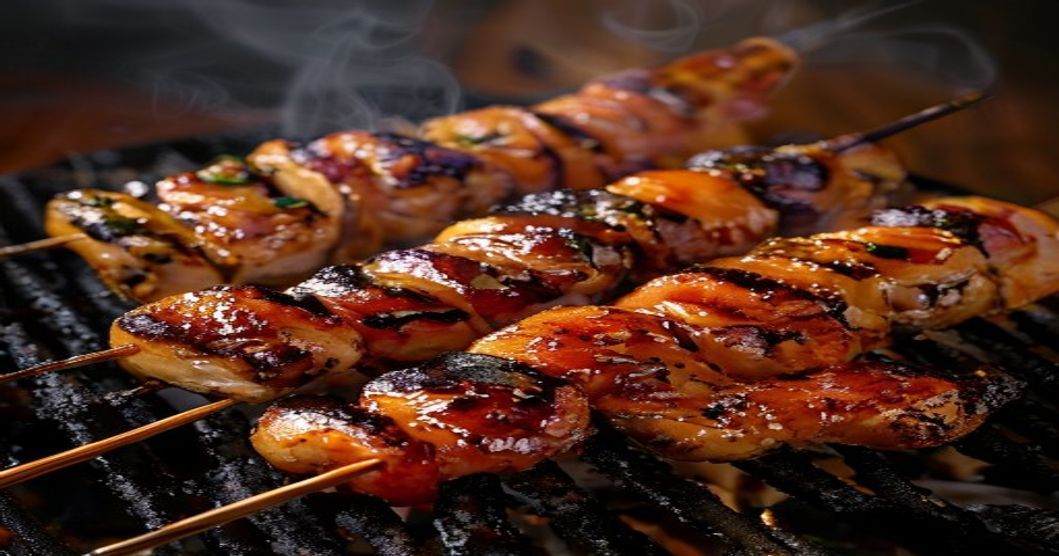
At almost every train station in Japan, in every izakaya alley, and in every convenience store refrigerator section, there is a small skewer of grilled chicken that costs between 100 and 200 yen. Most visitors walk past it looking for the nearest ramen shop. That is a significant nutritional mistake.
Yakitori — grilled chicken skewers — is one of the highest protein-per-yen foods available in Japan. It is fast, portable, delicious, and wildly underutilized by the fitness-minded foreigner.
The Nutritional Case for Yakitori
A standard yakitori skewer weighs around 40-60g of cooked chicken and delivers 10-15g of protein for roughly 120-180 yen. Order five skewers and you have 50-75g of protein for under 900 yen — cheaper and more protein-dense than most convenience store bento boxes, protein bars, or supplement drinks available in Japan.
Unlike processed protein products, yakitori is whole food. Real chicken, grilled over charcoal (or gas in cheaper spots), seasoned with either salt or tare sauce. Nothing engineered about it.
The Cut-by-Cut Breakdown
This is where most foreigners stop reading the menu and just order “chicken.” Do not do this. Each cut has a distinct nutritional profile:
| Momo (もも) | Thigh meat. Higher fat, richer flavor. Best for bulking. The most common and crowd-pleasing cut. |
| Mune (むね) | Breast meat. Lean, high protein, lower calorie. The cut for a cutting phase. Sometimes listed as sasami (fillet). |
| Negima (ねぎま) | Thigh alternated with green onion. The classic combination. Balanced macros, excellent flavor. |
| Tsukune (つくね) | Chicken meatball. Made from minced chicken with binding agents. Softer texture, moderate protein. |
| Hatsu (はつ) | Chicken heart. Extremely lean, very high protein, rich in CoQ10 and iron. Slightly chewy texture. |
| Reba (レバー) | Chicken liver. The most nutrient-dense option on the menu. Very high in iron, B12, vitamin A, and complete protein. Strong flavor. |
| Kawa (かわ) | Chicken skin. High fat, lower protein. Pure flavor bomb. Not a protein play — eat it because it is delicious. |
Salt vs. Tare: The Macro Decision
Every yakitori skewer comes with a choice: shio (salt) or tare (sweet soy glaze). This is not just a flavor preference — it is a macro decision.
- Shio (salt): Zero added sugar, no extra calories from sauce. Lets the natural chicken flavor come through. The choice for anyone cutting or watching carbohydrates.
- Tare (sauce): Adds a layer of sweet soy glaze containing sugar, mirin, and soy sauce. Adds roughly 20-40 extra calories per skewer. The better flavor choice, and fine for maintenance or bulk phases.
A practical rule: order the leaner cuts (mune, hatsu, reba) with tare for flavor compensation. Order the richer cuts (momo, kawa) with shio to keep total fat and calories in check.
The Izakaya Order Strategy
At a yakitori izakaya, the goal is building a high-protein meal without the calorie blowout that usually comes with drinking establishments. Here is a reliable framework:
- 2x negima (tare) — your base protein and flavor anchor
- 2x mune or sasami (shio) — lean protein top-up
- 1x hatsu (shio) — micronutrient boost, especially iron
- 1x reba (tare) — B12, iron, vitamin A in one skewer
- Skip the fried sides (karaage, fries). Edamame as a starter instead — free protein and fiber.
Six skewers plus edamame gives you approximately 60-70g of protein for around 1,200-1,500 yen. That is competitive with a dedicated post-workout meal at any restaurant in the world.
Convenience Store and Supermarket Yakitori
If you are not near an izakaya, every convenience store in Japan sells pre-made yakitori. Seven-Eleven, FamilyMart, and Lawson all stock them near the register — usually two skewers per pack for around 200-300 yen.
Quality is lower than a dedicated yakitori restaurant, but the macros hold up. A konbini yakitori pack is a legitimate post-training protein source when you are short on time or money.
Supermarkets go further: many have hot food counters (the sozai section) with multiple yakitori varieties, often at 80-100 yen per skewer — the cheapest protein per gram you will find outside of cooking at home.
Making It at Home
Yakitori at home requires bamboo skewers, chicken thighs or breast, and either a grill pan or a broiler setting on your oven. Soak skewers in water for 30 minutes to prevent burning.
Basic tare: 3 tbsp soy sauce, 2 tbsp mirin, 1 tbsp sake, 1 tsp sugar. Simmer until slightly thickened. Brush on during the last two minutes of cooking. Refrigerates for two weeks and works on any protein.
Thread 4-5 pieces of chicken per skewer. Grill 4-5 minutes per side on medium-high heat. Cost per skewer at home: around 30-50 yen. This is the most cost-efficient protein cooking method available to someone living in Japan.
The Bottom Line
Yakitori is not special health food. It is not a superfood or a trend. It is just grilled chicken on a stick, sold everywhere in Japan for less than a cup of vending machine coffee.
The fitness opportunity is in recognizing that this ubiquitous, cheap, delicious food is also one of the most efficient protein delivery systems in the country — if you know which cuts to order and how to order them.
Next time you walk past a yakitori stand, stop. Order five skewers. You just solved dinner and your protein target simultaneously.

コメント