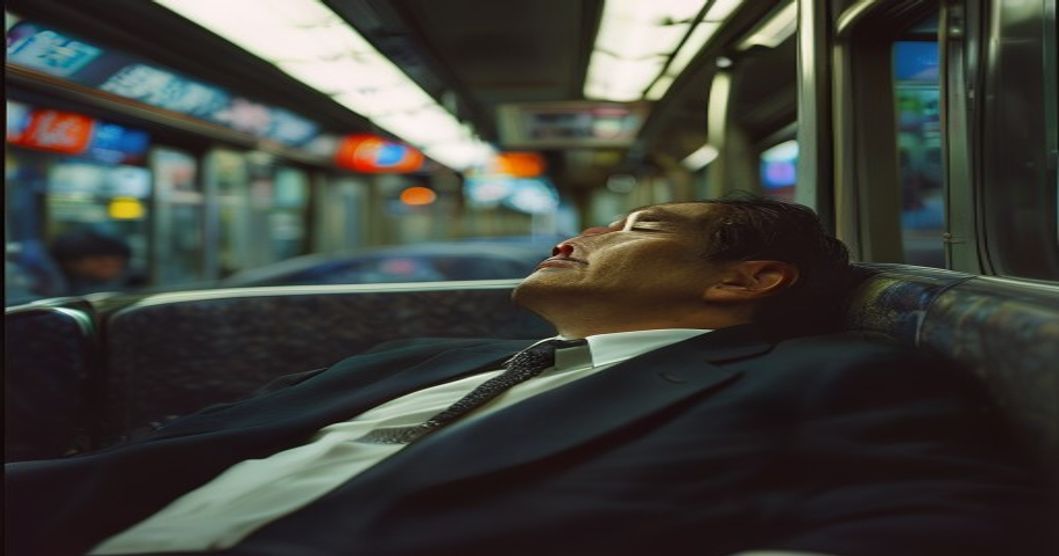
In Japan, falling asleep on the train, at your desk, or in a meeting is not embarrassing. It is proof you are working hard enough to be tired. There is even a word for it: inemuri — roughly translated as “sleeping while present.”
The rest of the world calls this a nap. Sports scientists call it one of the most underutilized performance tools available. And Japan has been doing it instinctively for centuries.
What Inemuri Actually Is
Inemuri is not zoning out or daydreaming. It is genuine micro-sleep — brief, intentional or semi-intentional sleep episodes taken during the day without formally “going to bed.” Japanese culture treats this as socially acceptable because it signals dedication: you are so committed to your work or studies that your body demands rest.
Unlike the Western guilt around daytime sleep, inemuri carries no shame. A salaryman napping upright on the Yamanote Line is not being lazy. He is recovering.
And it turns out, he is doing something that elite sports programs around the world have started deliberately engineering into their schedules.
What 20 Minutes Does to Your Brain and Body
A NASA study on military pilots found that a 40-minute nap improved performance by 34% and alertness by 100%. The US Army, the Japanese Self-Defense Forces, and professional sports teams across Europe now schedule naps as part of official training protocol.
Here is what happens physiologically during a short nap:
- Stage 1-2 sleep (10-20 min): Memory consolidation begins. Motor learning from your last training session gets encoded. Reaction time improves.
- Cortisol drops: Even a brief rest period lowers stress hormones that interfere with muscle protein synthesis.
- Adenosine clears: Adenosine is the chemical that makes you feel tired. Sleep metabolizes it. A short nap gives your brain a partial reset without the grogginess of deep sleep.
- Cardiovascular recovery: Heart rate and blood pressure drop during nap sleep, giving your cardiovascular system a genuine rest period mid-day.
Critically, naps under 20-25 minutes avoid entering slow-wave (deep) sleep. This is important — waking from deep sleep produces sleep inertia, the heavy grogginess that makes you worse than before. Keep it short and you wake up sharp.
The Coffee Nap: Japan’s Accidental Optimization
Japanese office workers have a habit of drinking canned coffee before a quick desk nap. This turns out to be scientifically optimal.
Caffeine takes approximately 20-30 minutes to enter the bloodstream and begin blocking adenosine receptors. If you drink coffee and immediately nap for 20 minutes, the caffeine hits precisely as you wake up — simultaneously with the adenosine clearance from the nap itself.
Studies comparing coffee naps to naps alone or coffee alone found the combination produced significantly better alertness, reaction time, and cognitive performance than either strategy individually. Japan stumbled onto this by cultural accident. Sports scientists now recommend it by design.
For Athletes: When and How to Use It
| Best timing | Early afternoon, 1-3pm. Aligns with the natural post-lunch circadian dip. Avoid after 4pm — too close to bedtime. |
| Duration | 10-20 minutes maximum. Set an alarm. Do not trust yourself to wake naturally. |
| Pre-nap caffeine | Optional but effective. Drink coffee or green tea immediately before lying down. |
| Environment | Dark and quiet is ideal but not required. Japanese naps happen in full noise — your body adapts. |
| Position | Upright or reclined both work. You do not need to be horizontal to enter stage 1-2 sleep. |
Why This Matters for Training
Most athletes focus their recovery attention on post-workout nutrition, sleep duration, and stretching. Mid-day napping is rarely part of the conversation — but the evidence suggests it should be.
A study published in the Journal of Sports Sciences found that a 30-minute afternoon nap after a night of restricted sleep restored sprint performance, reaction time, and subjective well-being in athletes to baseline levels. In other words, a short nap can partially compensate for a bad night of sleep — which is relevant for anyone training through life stress, travel, or irregular schedules.
For two-a-day training blocks, the nap window between sessions is not dead time. It is an active recovery tool. The Japanese athletic system — particularly in high school baseball and university club sports — has long incorporated afternoon rest periods between morning and evening practices. The results speak for themselves.
Where to Nap in Japan
If you are living in or visiting Japan, napping infrastructure is surprisingly good:
- Capsule hotels: Many offer day-use rates of 1,000-2,000 yen for a few hours. Quiet, dark, horizontal. Perfect.
- Manga cafes (manga kissa): Private booths with reclining chairs, available by the hour. Around 400-600 yen for 30 minutes.
- Park benches: Completely normal in Japan. Nobody will bother you.
- The train: The classic inemuri venue. Upright sleep on a moving train is a skill that improves with practice.
The Permission Japan Gives You
The most important thing inemuri offers Western athletes is not the nap itself — it is the cultural permission to take one without guilt.
In Japan, resting when your body signals fatigue is not weakness. It is intelligent management of a finite resource. The athlete who naps is not the lazy one. He is the one who understands that output requires input, and that recovery is part of the training load — not a break from it.
Close your eyes for 20 minutes. Japan has been telling you this was fine all along.


コメント